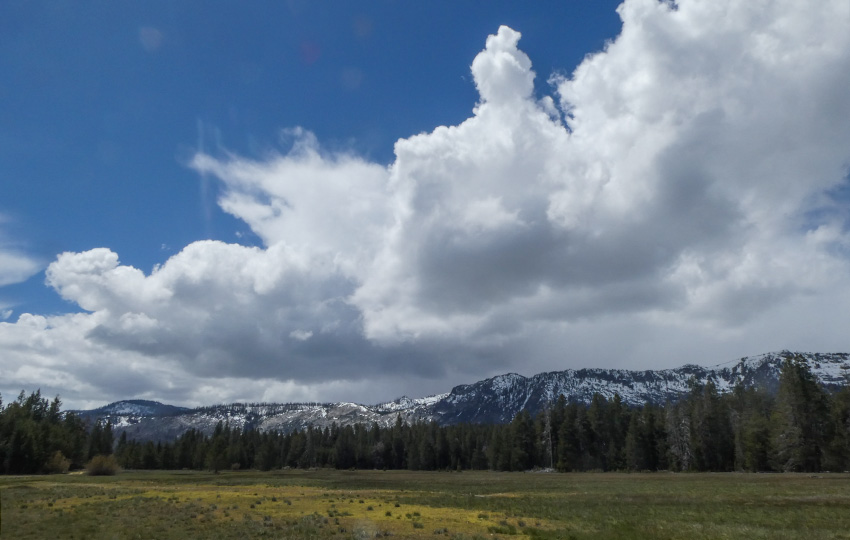
As Lake Tahoe’s 2025-26 winter comes to a close, I feel compelled to provide an update and reintroduction of myself. You know, since it’s been so long since I’ve posted anything on Tahoe Trail Guide (TTG)! I do share updates through my personal newsletter (JaredManninen.com) and via my YouTube channel. Admittedly, though, I just haven’t offered that type of correspondence here. And, for that, I apologize.
I also want to acknowledge just how neglectful I’ve been about publishing new articles for TTG in recent years. Please know that this isn’t for a lack of interest. Rather, it’s due to a general lack of time. That’s because I’ve filled most of my spare time with longer-term activities and educational goals. They’re all related to this umbrella project that I call Tahoe Trail Guide. However, these longer-term activities have gotten out of control by becoming forever and never-ending endeavors. So, recently, I’ve reevaluating my priorities and restructuring my project list.
There’s only so many hours in a day, after all, and I am a one-person operation. But have no fear. I still have a lot that I want to share with you! It’s just a matter of me carving out the time. And, again, I’m in the process of doing that.
Please note that this is a really long overview, update, and reintroduction. So pace yourself!
Support Tahoe Trail Guide with a financial contribution via PayPal (single contribution) or Patreon (reoccurring contributions). Your support of Tahoe Trail Guide is very much appreciated!

Looking Back
In 2017, when I started Tahoe Trail Guide, I was ambitious by writing 2-4 articles per month. I maintained this output for three years, and it yielded a solid body of work.
Initially, much of that content revolved around hiking and backpacking. In addition to having knowledge enough to write quickly and confidently, there were a couple of other factors at play during those early years.
The most important one was that I only worked part-time during the winter. So I had half of each week available to write during that time. The other factor that enabled me to write so much early on is that writing was my priority. At that point, I hadn’t even considered making YouTube videos.
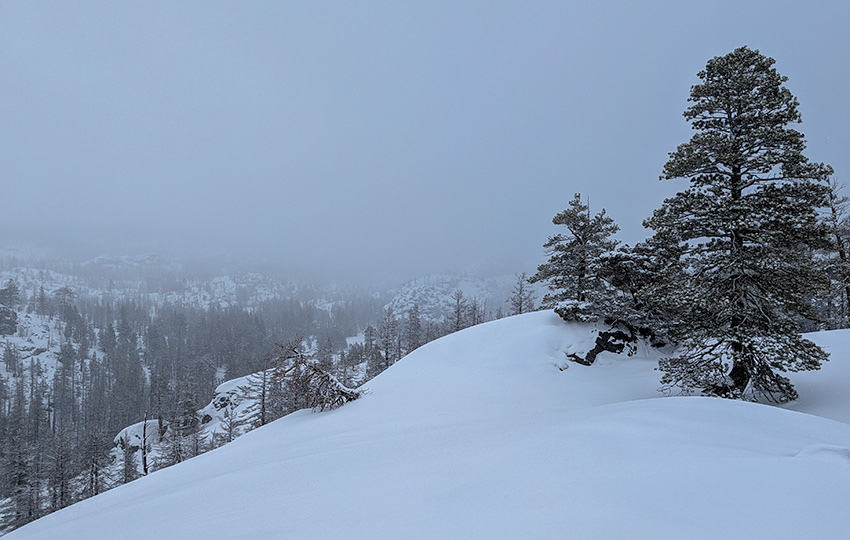
Carving out a Niche
While tackling those hiking articles, however, I was aware of an issue that I’d have to address. And that’s the fact that there was (and still is) tons of information available about hiking and backpacking at Lake Tahoe. So I began to consider other ways in which to differentiate my website from others.
Fortunately, the process of building Tahoe Trail Guide has overlapped with my experience of becoming a cross-country ski instructor. So as I dove deeper into xc skiing, I invested more time in creating cross-country ski content. I initially started writing articles about the components of an xc ski setup (skis, bindings, boots, poles…). But then I started making videos to accompany those articles.
Eventually, it became clear that demonstrating ski technique via video made more sense than writing about it. Realistically, learning new body movements from a book or article can be challenging. And, not surprising, as I published more videos more people subscribed to my YouTube channel. Additionally, I found myself having way more conversations with viewers via the video’s comment section compared to my TTG articles.
So, I kept making videos!
All of that said, it generally takes me 2-4 days of effort to produce a quality article with accompanying photos, maps, links, etc… This is roughly the same amount of time that it takes me to make a “how-to” video for cross-country skiing. So once I started making videos, I was faced with the decision to pick one or the other (i.e. article or video) because I couldn’t publish both during any given week.
Lack of Online XC Ski Resources
The biggest reason that I’ve emphasized cross-country skiing content in recent years is because there’s actually very few people consistently publishing educational xc ski content. You can find plenty of information about World Cup race results, for example, or seasonal gear reviews. But there just doesn’t appear to be much out there for beginner cross-country skiers. At least not in a comprehensive format that offers logical progressions.
So what I find online is usually a mixed bag…
- Work produced by people who stopped making xc ski videos soon after starting. The videos are usually helpful. However, they’re old and limited and the creator’s social media profiles are stagnant.
- Content that’s heavily steeped in race culture. This is the lost in the weeds type of information and instruction that’s too detailed and complicated for the general public. No surprise that this is the realm from which the terms “Nordic nerds” and “Nor-dorks” originate.
- Short-form videos (30-90 seconds) that are ubiquitous on social media. Instead of receiving too much information, these videos offer too little due to their abbreviated format. So if you want more detail, you’re usually stuck with the vague AI slop in the video’s description. These types of mini-lessons also tend to be disconnected from other topics.
- Content posted by people sharing their very first xc ski experience. These videos often feature the creator flailing about on the trails. And sometimes they’ll post, as a voiceover, comedian Jim Gaffigan’s bit about xc skiing. Humorous, but not helpful.
From 2018-2020, I began making cross-country ski and snowshoe videos. Then, by the 2020-21 winter (COVID measures in place), I cranked out a steady stream of cross-country videos. This is when I fully understood just how little xc ski content existed online. So I started receiving a lot of positive feedback, which I found to be encouraging.
A Niche within a Niche
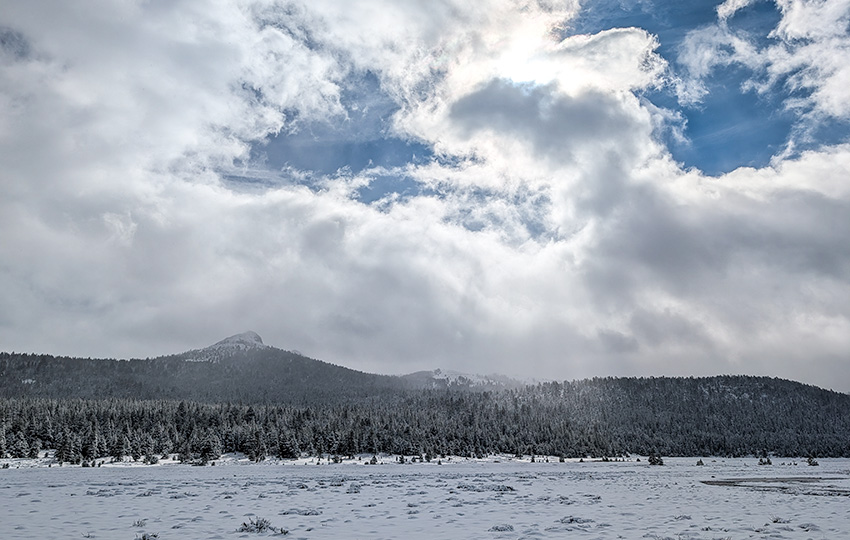
Backcountry cross-country skiing is something that I’ve been passionate about ever since I started skiing. So I was surprised to discover that, in addition to the lack of general xc skiing content, there’s even less for those who want to venture off-trail. So, by producing work about backcountry xc skiing I found another way to further differentiate myself and what I have to offer.
In many respects, my accelerated xc ski learning has been a direct result of embracing both groomed and off-trail skiing. I’ve discussed the benefits of performing both xc ski disciplines in at least one other article.
Staying Connected to the Audience
As soon as I started publishing work (articles and videos), I made a commitment to respond to all comments. This isn’t a big deal when you don’t have many followers. However, as soon as the subscriber count grow, so do the comments. So each winter, for example, it’s not unusual for me to receive 5-15+ comments, emails, and inquiries on a daily basis. And, yes, I read and respond to each and every one of them!
Most people don’t do this. And I can’t understand why that is other than they’re too busy. But why post on social media if you don’t want to be social? This is another aspect of my process that helps to differentiate myself and my work from others. But it also takes up a lot of my time on any given day!
Nature-Related, Year-Long Pursuits (aka Tahoe Big Year)
In 2019, two years after launching Tahoe Trail Guide, I discovered the annual project called the Tahoe Big Year (TBY). This is a year-long, nature-related endeavor hosted by the Tahoe Institute for Natural Science (TINS). And these Tahoe Big Years operate in a 3-year cycle.
- Birds
- Plants and Wildflowers
- Break
The goal of the individual participating in a TBY is to find as many different species (depending on that year’s focus) within a designated boundary (set forth by TINS) during a calendar year.
For example, during the first year you have to find as many different bird species from January 1 – December 31. In the second year, you’ll be searching for plant life (trees, bushes, ferns, flowers, etc.) throughout the year. Lastly, the third year is a designated break from it all. And, believe me, this is necessary in order to regain your sanity and reconnect with all of the friends and family you neglected during the TBY(s)!
Years of Searching for Tahoe Birds and Plants
In 2019, I logged onto iNaturalist and began participating in that year’s wildflower TBY. This 3-year cycle began with birds in 2015, and was followed by wildflowers in 2016. So this was only the second wildflower year.
Since I don’t have any formal education in botany, for example, identifying plants was new to me. However, this type of a DIY nature hunt is right up my alley. So I began to grind everyday once I realized the level of commitment it took to participate in a TBY. That, and there are so many different plants and wildflowers in Tahoe! I placed second in that year’s TBY with roughly 350 plant species. Bob Sweatt, on the other hand, took first place with 650+ species!
The following year (2020) was a break year. However, I didn’t let it go to waste. I invested in a good DSLR camera and telephoto lens and got to work on learning about birds.
Then, in 2021, I participated in the third birding Tahoe Big Year. This included another steep learning curve, and it was even more competitive than the wildflowers. I somehow managed to place third by logging 201 bird species for that year. Reaching the 200-mark is a big deal in Tahoe because there have historically only been roughly 325 documented bird species to have traveled through area. And many of those are fairly rare, having made a random sidequest to Tahoe for a short while. So it’s just really challenging to reach 200.
The following year (2022) was another plant and wildflower TBY. Fortunately, I knew what I was in for this time around! So I bested my 2019 species count by 200+ plants. Again, I finished in second place (550+ plant species) to Bob Sweatt and his 830+ species!
We all enjoyed another break year in 2023. However, I kept grinding for birds and plants as I wanted to add to my various life lists, as well as to generally learn more about Sierra Nevada flora/fauna.
In 2024, I pulled out all of the stops because, in the back of my mind, I believed that this would be the last TBY that I’d participate in earnest. My main goal was to reach 200 bird species as soon as possible. Then, everything beyond that would be a bonus. Additionally, it was my goal to photograph every bird species on my list.
I succeeded at photographing all of my birds, except for one species – argh! Regardless, it was a huge endeavor in and of itself. And since I had plenty of photos to work with, I shared many of them throughout the year on the Tahoe Birding Facebook group. And, of course, I responded to all of the comments that followed. I continued to grind late into the year and, thanks to logging some crucial birds in those final weeks, I finished in first place with 221 species!
Yeah, 2024 was most definitely a big year!
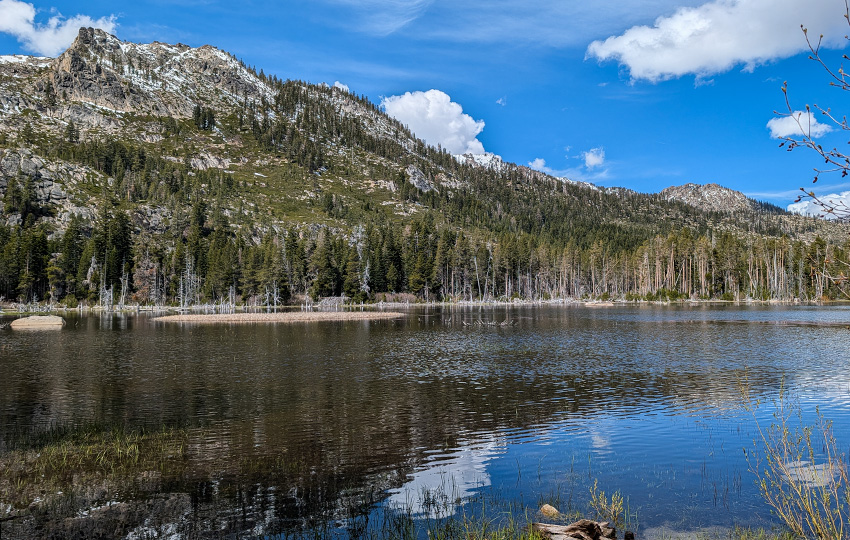
Letting Go of the Non-Stop Nature Grind
Most people choose to participate in one version of the TBY or the other. Birds or flowers. But even when they do back-to-back years, they often don’t grind as much for one as they do the other. Me being so competitive, however, I was always searching regardless of the year’s focus. So during those four years that I was dedicated (2019, 2021, 2022, and 2014), I spent every spare minute searching for new species.
Last year (2025), however, I decided to stop spending so much time on TBYs. Admittedly, my competitiveness got the best of me at the beginning of the summer. So I managed to document 330+ species for the year. But by July, I was able to curb that urge to stop to photograph everything.
Around that same time, I began to assist a friend who was new to TBYs. Basically, I showed here some unique locations to find key wildflowers. In the end, she took third place with 640+ plant species. More than I ever logged. So I got to live vicariously through her experience!
Realistically, I’ll continue to photograph, illustrate, and document birds and plants. Not only is it fun and educational, but it also contributes to citizen science. And I’ll continue to support TBYs. However, I’m claiming emeritus status at this point!
Full-Time Jobs
In the context of Tahoe Trail Guide (and my supporting YouTube channel), I’m a guy who likes hiking, backpacking, cross-country skiing, and snowshoeing. And, based on those Tahoe Big Years, you can probably tell that I also love to search for birds and wildflowers. But none of that actually pays the rent.
Therefore, I work full-time at a family-owned summer resort during the warmer months. And, in the winter, I now work full-time at a cross-country ski center. This year (2026) marks 10 years of working at the summer resort and 12 years in the cross-country ski industry.
Certifications, Training, and Personal Growth
In addition to my seasonal work and the Tahoe Big Years, I’ve participated in a number of outdoor-related events in recent years. Listing feels egotistical. However, I offer them to illustrate the fact that I’m always training and learning more about being in nature. That, and the fact that these additional experiences take more time out of my schedule.
- Beginning with the 2019 TBY, I’ve continued to contribute to citizen science via iNaturalist. This involves posting nature observations and identifying other peoples’ species. And, believe me, contributing to the website can wind up being a rabbit hole like any other social media platform!
- Also starting in 2019, I began to volunteer with the Donner Summit Historical Society. Although the majority of my experience is leading the Mount Judah/Roller Pass hike during their annual weekend fundraiser in the fall, I spend a lot of time preparing for it each year.
- Wilderness First Responder certification (2019).
- Cross Country Ski Instructor, Level 1 (2020).
- Leave No Trace Trainer certification (2020).
- California Naturalist certification (2020).
- Wilderness First Aid recertification (2021).
- Cross Country Ski Instructor, Level 2 (2022).
- Cross Country Ski Instructor, Level 3 (2024).
- Telemark Ski Instructor, Level 1 (2026).
I haven’t necessarily kept up some of my certifications, such as the Wilderness First Responder or Leave No Trace Trainer. However, the experiences and education were great and I’ve still retained at least some of that knowledge.
Wrapping Things Up
To be clear, my intention for this update wasn’t to offer up a laundry list of excuses as to why I’ve failed at writing new articles for Tahoe Trail Guide. Although, it actually kind of is. Haha!
Really, though, everything I do supports everything else I do in one way or another. So I consider all of my training and volunteerism to be prep work for future projects. I just wanted to let you know the score, and to reassure you that I still have lots of plans for Tahoe Trail Guide!
I hope you’re doing well, and I encourage you to stay tuned for new articles this summer!
Yes, they are beautiful, and they are called Hazel Grouse in English.
OK, then I believe the Sooty Grouse is closer to our orre (Black grouse, Lyrurus tetrix)
“But they definitely don’t fly too far!”
That goes very much for the Hazel Grouse also; they are certainly not the most skilled in flying and they look really funny when they appear in the air.
“And a lot of times, they’ll scare the heck out of you because they’ll often remain hidden until you’re walking right next to them.”
Yes, yes, that is how you most often encounter both orre and tjäder here in Sweden.
Haha, I’m glad to know that grouse are similar all over the world 🙂
Hello, Jared, and thanks for the update! Having spotted over 200 bird species in one year is impressing. I am close to 200 hundred here in my part of Sweden but in 60 years. I wonder what the Sooty Grouse is called in Swedish, if there is a Swedish name for it at all, because I do not think Dendragapus fuliginosus is to be found here.
I have looked up Dendragapus fuliginosus, and the Swedish name for it is sotjärpe and it doesn’t live here.
See my previous note regarding some similar birds that are found in Sweden 🙂
Hey Magnus!
Great to hear from you 🙂
Doing a Big Year is a huge commitment but affords you the opportunity to see a lot of birds in that one-year timeframe. I don’t track my “life list” too closely, but I suspect that I only have 250 (or less) total bird species on that life list. So, most of the stuff I’ve seen has been during the Tahoe Big Years. Super fun and educational!
I did a quick search to see the types of grouse, etc… that you have in Sweden and, although you don’t specifically have Sooty Grouse there, you do have some really awesome (similar) birds.
• Western Capercaillie (Tetrao urogallus) — I’ve seen a bunch of videos of this cool bird this past winter, posted by skiers and snowshoers who’ve come across it!
• Black Grouse (Lyrurus tetrix)
• Rock Ptarmigan (Lagopus muta)
There may be other grouse and ptarmigan in your part of the world, as well. I’d be curious to know if you’ve ever heard/seen any of those three listed birds.
Again, great to hear from you. And I hope you’re doing well 🙂
Jared
Thanks for your reply! Great to hear from you also, Jared.
Yes, Tetrao urogallus is called tjäder in Swedish and is our biggest grouse. The male is notorious for his aggressive behaviour and many hikers and bikers and even car drivers have been attacked by him. Lyrurus tetrix is called orre in Swedish and their mating ritual is a famous spectacle, often with many participating individuals. Lagopus muta is called fjällripa and lives in the north. I have quite a number of times seen the two first species but never the third since I have not enough been in its preferred environment.
Those are all great birds. We have a variety of Ptarmigan near Lake Tahoe, and I always keep my eye out for it when I’m in the specific region that it’s previously been documented. However, I’ve yet to actually see it myself. One of these days!
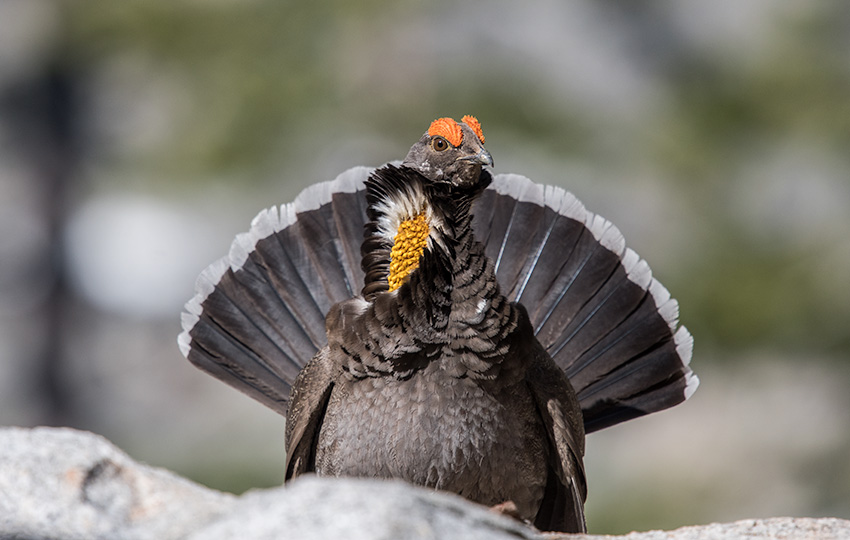
But the Sooty Grouse that we do have are quite plentiful, and you can often walk fairly close to them. Mostly people hear them, however, as they like to sit up the trees and produce a low decibel “whoomp, whooomp, whoomp” sound. Vacationers often have the same question … “what is that sound? and owl?” So it’s fun to be able to show/share with them the species. And it’s always a fun game to try to find them up in the trees. Despite their relatively large size, they blend in so well 🙂
Thanks, Jared, for further information. Since the Sooty Grouse is called sotjärpe in Swedish I wonder if it shares some features with our järpe (Tetrastes bonasia) (https://sv.wikipedia.org/wiki/J%C3%A4rpe) which is smaller than the Sooty Grouse. Does it for example fly like our järpe in an upright, almost sitting position?
That’s a really nice looking grouse! I’ve seen them called “Hazel Grouse” in english.
As far as flying goes, I think the Sooty Grouse still tends to fly like a regular bird. But they definitely don’t fly too far! And a lot of times, they’ll scare the heck out of you because they’ll often remain hidden until you’re walking right next to them. So, for example, if there in in the bushes/shrubs, and you walk by them, they burst out and fly away. And their wing beats are pretty loud, like a drum. So the whole scene gets your heart racing 🙂