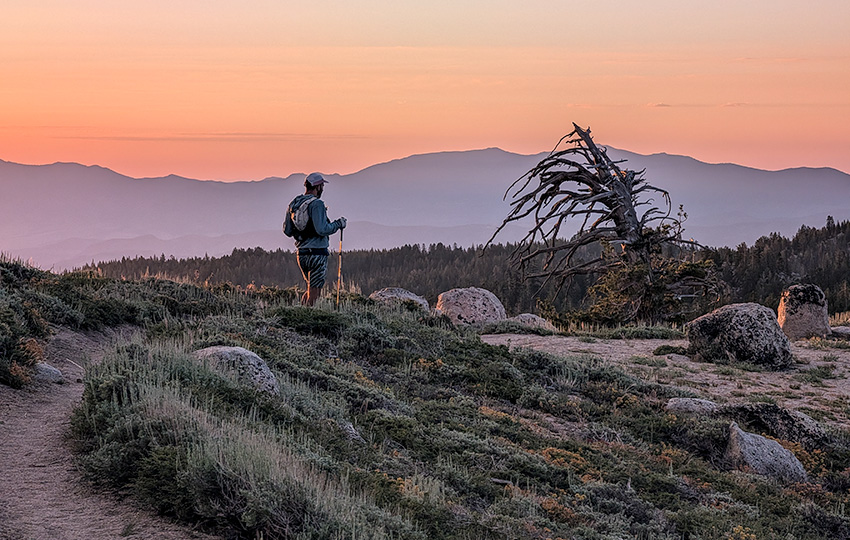
By the time I reached the Diamond Peak Ski Resort aid station, it was about 10pm. Had things been going as Dave originally planned, I would’ve only had to wait an hour or two for him. However, things began to unravel earlier in the day, at around the 54th mile (of the 102 mile course). That is to say, Dave was struggling to adequately fuel. He started vomiting most of the water and food that he’d been consuming.
Fueling is one of the biggest hurdles that all endurance athletes must somehow overcome. You’d think that simply through the act of exercise, the body would crave and convert any and all calories into energy. But the reality is that, after so many miles and hours of effort, the body begins to prioritize biological processes.
So the further you go down that road (pun intended!) during an endurance run, for example, the more the body channels its energy into locomotion. Digestion takes a backseat, and the body often rejects whatever you put into it. Not surprising, this is accomplished by puking that fuel back out.
Support Tahoe Trail Guide with a financial contribution via PayPal (single contribution) or Patreon (reoccurring contributions). Your support of Tahoe Trail Guide is very much appreciated!

En route to the Diamond Peak Ski Resort aid station at mile 74 (where I’d meet him), Dave recalled, “At one point I ran an 11:35 split which seemed ridiculous. But this was probably a bad idea, as it roiled up my stomach again and I started run-walking a bit in the last couple miles. In the final quarter mile towards Diamond Peak, I ate another Tums — and immediately puked it up for puke number 5.”
Clearly, nobody can perform at their best (or perform at all!) when deprived of water, calories, and sugar. So I knew that the 29 miles to the finish line were going to be challenging, to say the least.
In the first half of this two-part essay, I shared how I prepared for my pacing duties. If you haven’t read it yet, I encourage you to take a look before continuing on with this second part.
My First Experience as an Endurance Run Pacer (Part 1): The Last 29 Miles of the 2026 TRTER 100
In this second half of the story, I share what it was like to pace my friend, Dave, during those last 29 miles of the 2026 TRTER 100-miler.
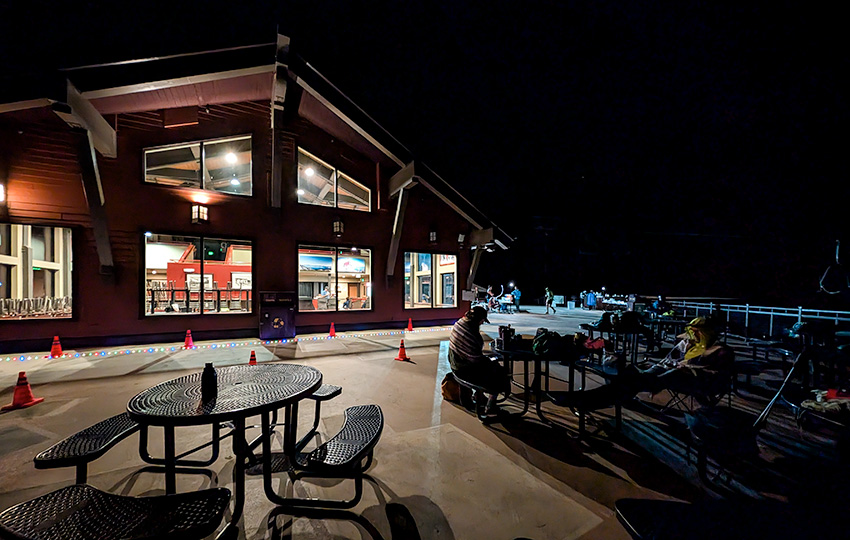
Waiting at the Trailhead (Diamond Peak Ski Resort at Incline Village, NV)
The Diamond Peak Ski Resort is the only location on the TRTER 100 course where friends, family, and crew (including pacers) can meet their runners. Because pacers are supposed to check in at Diamond Peak, they’re not really allowed to join their runners at any other location. You wouldn’t want to anyway, though, because every other aspect of the course is remote.
So the parking lot was full when I arrived. But since Dave was running behind, I decided to lean my seat back and close my eyes. I didn’t actually sleep, but the rest was helpful nonetheless. Around 11pm, I grabbed my gear and walked up to the aid station to check in.
The 100-mile runners pass through Diamond Peak Ski Resort twice along their journey. The first is at about mile 40, where they can pick up their first pacer. Then, the second time around, roughly at mile 74, their second pacer takes over. I was meeting Dave at “Diamond Peak 2,” the 74-mile marker, and this was by design.
For example, Dave didn’t ask me to pace him during the 30+ mile section mid-day where he’d be running faster and tackling more elevation. I’m a decent runner, but that would’ve been too much for me. And, I probably would’ve become a liability. So that duty went to one of his much younger and more athletically fit friends.
Nick, 19 years old, is a phenomenal athlete who also happens to be an exceptional cross-country skier. And even though this was Nick’s longest run ever, and that it took place during the hottest part of the day, he looked fine by the time they both reached the aid station much later that night.
For me, I was there to bat clean-up. The section that I was pacing was the last 29 miles of the race. So, after the initial 1,600 feet of elevation gain directly out of the aid station, the trail was mostly a traverse until it began its descent into Carson City. That, and by the time we met, Dave knew that he wasn’t going to be breaking any land speed records. So I was there to make sure that he stayed focused and alert throughout the night, and that we hit the aid stations in a timely fashion. Then, at each aid station, I filled his water bottles and grabbed him whatever food he could keep down while he took a seat and rested.
The two of us have many miles of shared experience on the trail under adverse conditions and for long durations. This is due to cross-country skiing and running together over the past few years. So we’re familiar with each other’s baseline, meaning that we know when things look right and wrong with each other. Therefore, I was also there to provide mental support and conversation (when appropriate). And, most importantly, I was there to either signal for medical aid or to ensure that Dave crossed the finish line.
I was glad that I brought some extra layers of close to wear while I waited because Dave and Nick didn’t actually arrive until 2:15am. And, even though it was summer, sitting outside for three hours in the middle of the night was still chilly. I drank some coffee and chatted with other runners’ supporters. But mostly I just visualized myself completing that section of the race. That, and I enjoyed watching bats swoop around the area.
When Dave and Nick finally arrived, we immediately began to prepare for the next leg. I grabbed English breakfast tea for Dave and quesadillas for Nick. Then, I shed my extra clothing layers while they described Dave’s inability to keep any food down beginning soon after mile 54.
Vomiting or suffering from diarrhea, for example, can be deal-breakers in any endurance event. Dehydration or a lack of nourishment (or a combination of both) caused by both conditions can make you to start circling the drain in rapid fashion. Fortunately, Dave was still very much lucid and strong so the plan remained to carry on.
Diamond Peak 2 to Bull Wheel Aid Station
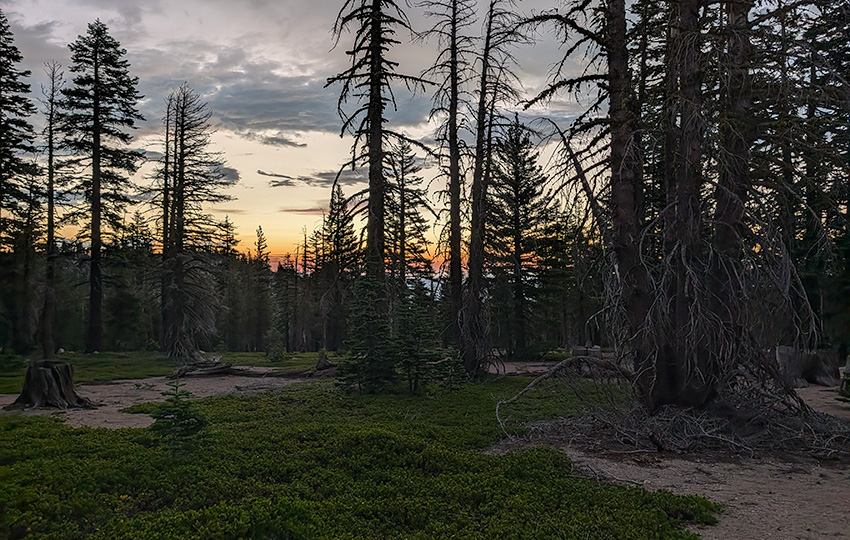
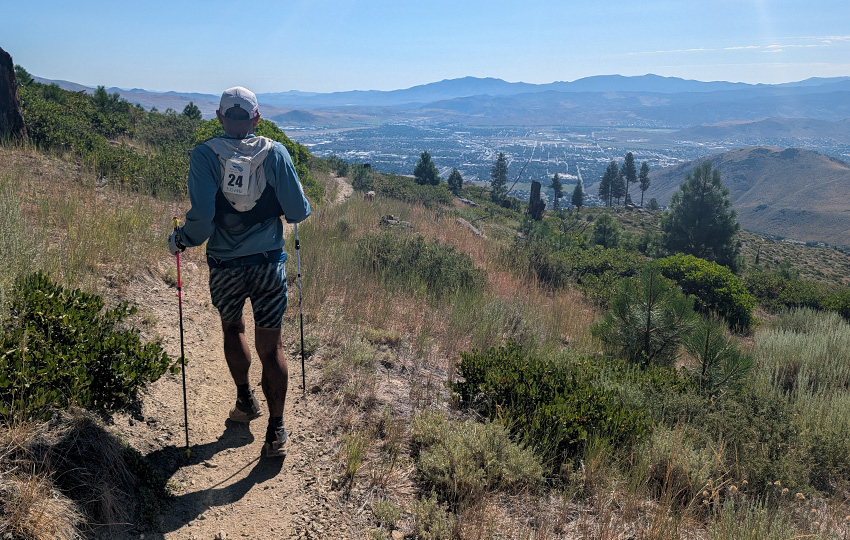
After resting for 20 minutes, Dave said it was time to go. So we said goodbye to Nick, then began our ascent of the ski run. I was grateful that I shed my pants and jacket because I immediately warmed up once we started climbing. And, since we had to tackle 1,600 feet of elevation gain in those first two miles, we just settled into a power hiking rhythm.
Dave was initially doing well. But upon reaching the steepest section of the climb, which was about halfway up, he had to sit down. Then, he puked up all of the tea that he drank at the aid station. This was his sixth episode.
During this time, a couple of other groups of runners and pacers passed us. There wasn’t anything worth saying, though, because we all knew the score. It was going to be a long night.
In contrast, I felt amazing. I had taken the two previous days off from running, so my legs were well rested. That, and my heart rate wasn’t spiking at all. In fact, my fitness watch was consistently reading 110-120bpm (beats per minute) on the climb. A walk in the park, so to speak. I was also so hydrated that I pissed twice just in those first two miles.
My biggest realization in that first section was that this run was going to be mostly silent. Dave was really just focused on putting one foot in front of the other while keeping the sips of water that he was taking down.
I don’t mind this type of experience where I’m in the zone, looking and listening to the nature around me. In fact, I prefer to be quiet and fully immersed in the landscape. However, having adventured with Dave over the past few years, I’ve known him to be chatty and conversational. In fact, his chattiness has always been indicative of his high level of fitness. This is that baseline in which I referred to earlier.
I’ve seldom seen Dave struggle for any significant periods of time. So his silence told me that he was not only working, but struggling.
I’ve done enough endurance events to know that suffering often just needs to be done in silence. A lot of people think that distraction through conversation and/or cheerleading is a helpful tool for those in pain. However, I’ve always found that approach to be counterproductive.
This isn’t to say that the occasional meaningful statement or directive isn’t helpful. And if the athlete wants to talk, do it. But nonstop words of encouragement and applause or trying to draw the person into a full conversation while they’re essentially pushing themselves to the limit often sabotages their chances of successfully completing the task at hand.
In those scenarios, most people are just trying to conserve energy from all non-essential systems and redirect it to the ones actually needed. In this case, Dave just had to focus on keeping his legs moving.
Admittedly, being the supporting element in this kind of scenario is challenging. When you care about a person, you do want to offer words of encouragement and motivation. But during those desperate times, they’re solely focused on holding everything together, shaping their reality, through thought and will power. So speak when necessary but, ultimately, it’s most important to just be there for them.
At the Bull Wheel aid station, which was just off of the top of the ski run, Dave drank some flat Coca Cola. That’s a thing with endurance races. Coke that’s flat and often on the warm side. I know it sounds nasty. However, it’s sugary and has some caffeine, and you don’t have to worry about carbonation causing you to belch all the way down the trail.
Bull Wheel Aid Station to Tunnel Creek Aid Station
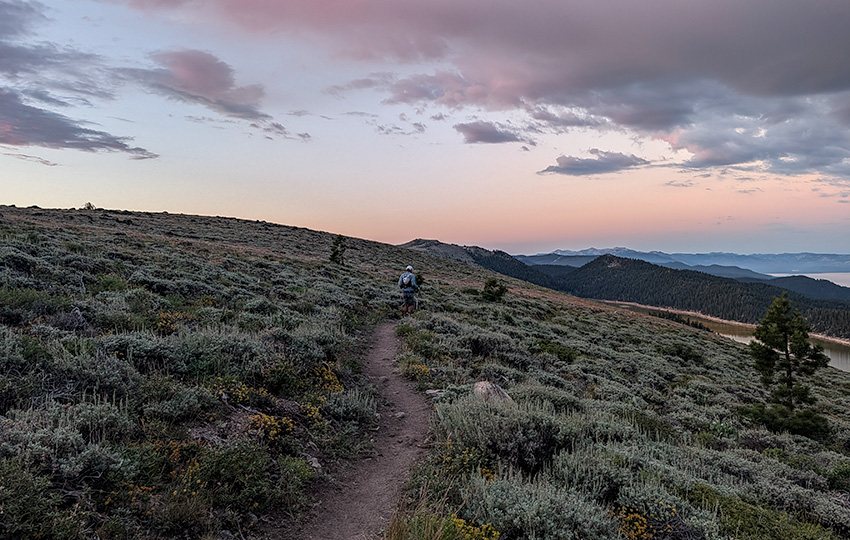
Dave rallied after Bull Wheel. So we ran the distance to the Tunnel Creek aid station.
The lighting system that I borrowed from a friend was bright enough to cast shadows across the trail, creating good depth of field. So I wasn’t worried about tripping. And, although we chatted briefly on that stretch, we mostly just ran. In silence. And it was glorious.
A few weeks back, Dave and I had run this same section of trail together. I recall finding a Great Horned Owl feather at the top of the ski run. So, I was hopeful that we might at least hear an owl at some point during the night. But that never happened. In hindsight, I can’t help but wonder if all of the human activity from the race caused the creatures of the night to stay silent.
I couldn’t believe how many more oncoming runners were still making their way to Bull Wheel! This meant that they had to run the Tyrolean downhill for a second time to Diamond Peak. Then, they’d have to climb back up the ski run and hit Bull Wheel one last time before reaching the same exact location that they were passing Dave and I. But it was already 3AM. How in the heck were they going to make it in time? Or, were some of them just going to call it quits at Diamond Peak 2?
The Tunnel Creek aid station was more elaborate than Bull Wheel. Kinda like a party in the woods, complete with music, food and drink, and a bunch of volunteers ready to lend a hand. Fortunately, at Tunnel Creek, Dave was able to drink more Coke and eat some tater tots. I had with me two spare plastic bags, so I put some tots in one of them and Dave carried them so that he could continue to eat them while moving.
While Dave rested, I went and used a porta potty. Surprisingly, as I was about to reach the first in line, it was whisked away by a support truck. Mind you, it was the middle of the night and there wasn’t any lighting around the potties. And, they were all on trailers. But, for whatever reason, I just didn’t realize that the first was attached to an idling truck. That would’ve been a serious plot twist had I managed to climb up in it before it left!
Tunnel Creek Aid Station to Hobart Aid Station
After Dave rested and ate and drank what he could, we kept running. More darkness and silence, save our footfalls and breathing.
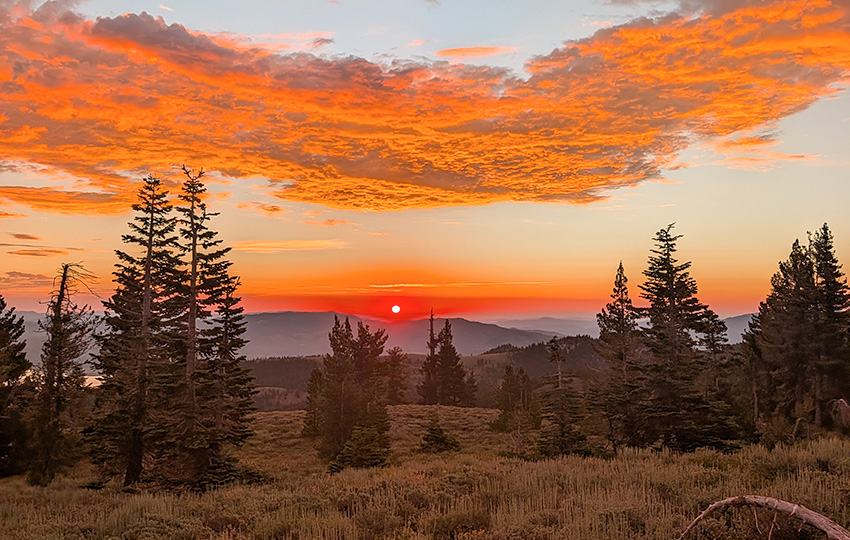
The trail began to climb another 800 feet. And as we were ascending so, too, was the sun. It was breaking over the mountain range east of Washoe Lake. And, at that point, there was enough ambient light that we could safely turn off our artificial lights.
Dave sat down on a rock and took a moment to perform some prayer.
Not long after, he again sat down. This time I was concerned that he stopped to puke. However, that wasn’t the case. He just wanted to take another break and some more breaths. I took the opportunity to step off the trail and take another piss.
We continued on down the trail.
Just prior to reaching the open ridgeline above Marlette Lake, someone on a bicycle approached us. An odd sight at that time of the day. But as the person came closer, we saw that it was medical personnel. Most likely from the Hobart aid station. He was making the rounds to see if anyone was in need of help. We gave him the thumbs up and kept going.
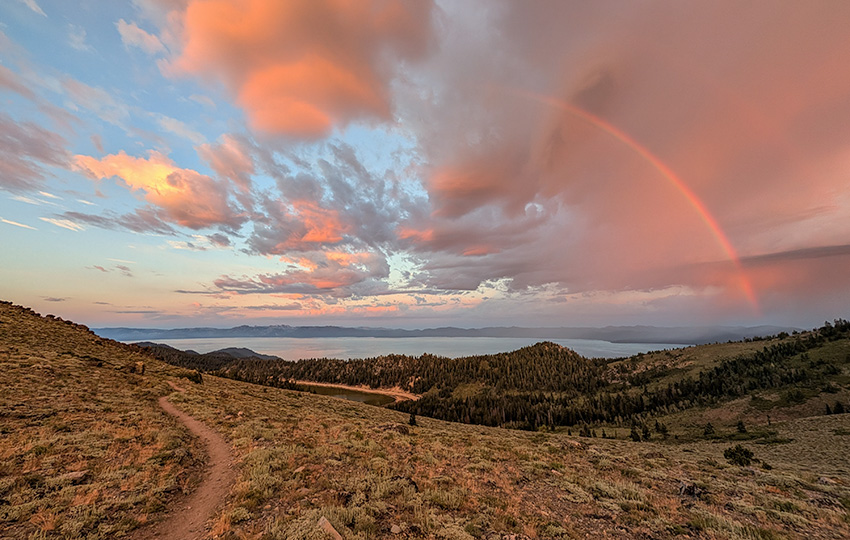
We exited the forest and began running the open section of ridgeline above Marlette Lake. Our timing of this section of trail was serendipitous. Not only did we have views of a blazing sunrise over Nevada, to the east. We also saw a double rainbow when looking west, over Lake Tahoe. Unbelievable, really, and it’s entirely possible that Dave and I were some of the only people in that entire race to bear witness to both of those views at that moment in time. I say this because we only saw a couple of other runners before and after the Hobart aid station.
As it often happens when we’re on the trail together, I fell back because I stopped to take photos and videos. Dave, on the other hand, was en route to the Hobart aid station at all costs. So once I got my fill of footage, I picked up the pace.
We rounded the corner and made our way down to Hobart soon thereafter. We were somewhat disappointed with the aid station because it wasn’t nearly as extravagant as Tunnel Creek. In fact, its snack options were quite minimal. But that just ensured that we wouldn’t stay for very long.
While Dave snacked, I filled our water bottles. Then, we resumed our journey.
At that point, time was no longer on our side because the sun was rising and with it, the temperature.
Hobart Aid Station to Waterfall Aid Station (mileage, time)
The wonder and awe of running through the night had all but worn off after seeing those sunrise vistas. And, soon after leaving Hobart, the harsh reality set in that the 10 miles to the Waterfall aid station were going to be rough.
This is because as it grew hotter, we began to move slower. Not a snail’s pace, mind you. Dave was actually power hiking a consistent 3.5 mile per hour pace, which was incredible. But we were running far less than we were walking. And Dave was speaking even less. Despite it all, however, we were still making progress.
But I had to recalibrate my expectations and approach to the final 16+ miles.
People say it’s less effort and more efficient, energy-wise, to walk. And I understand this concept. However, we’re not all built the same. For example, I’m only 5’6” so when it comes to hiking I generally top out at about 3.5mph. And if I am hiking at that pace, I’m basically at threshold. Anything faster than that, and I’d rather just go into a shuffle or slow jog. That’s because trying to hike faster than 3.5mph (for me) feels like I’m trapped in the backseat trying to claw myself forward. And even if that’s theoretically supposed to save me energy, the psychological toll it takes (due to never feeling like I can keep up) is exponentially more devastating.
This is how it’s always been, and that’s okay. I’ve thru-hiked the Appalachian Trail. And I am absolutely fine with a 3.5mph pace as my top speed when hiking. I have no interest, for example, in training to be a 4mph hiker.
Dave is extremely strong, and his power hiking pace continues. Fortunately for him, his body and legs felt fine. So he continues. We run for short bursts, but less and less.
About two miles before reaching the Waterfall aid station, Dave needs to rest. This time, however, he pukes. Number seven. This beats his personal record of puking six times in a previous race.
As I mentioned before, this is a fairly common thing for many endurance athletes. That is, not being able to keep down food and water once you reach a certain amount of distance and effort. I’m grateful that I’ve yet to experience this problem. But that’s mostly because I haven’t ever tried running 100 miles!
Dave feels better after puking, so we keep moving.
We make it to Waterfall aid station, and it’s here that I douse Dave with cold water. At Waterfall, they have buckets of ice water with sponges just for that purpose. First I sponge his head and neck, and then his arms. Afterwards, I grab him more Coke with ice, and fill up his water bottles with water and ice.
He was able to keep down some Cheezits, so I stuffed a handful of them in that second plastic bag that I was carrying. Dave was shivering after the ice bath, so I had him sit in the sun for a minute.
Meanwhile, I snacked on chips, quesadillas, Coke, and pretzels. I still felt decent, but I was ready to get on with it and finish the last leg of the race.
Waterfall Aid Station to Finish Line
My feet were sore and didn’t have much bounce left in them. Kinda like driving on flat tires. That, and I felt fatigue and soreness all over. But there was nothing left to do but to carry on.
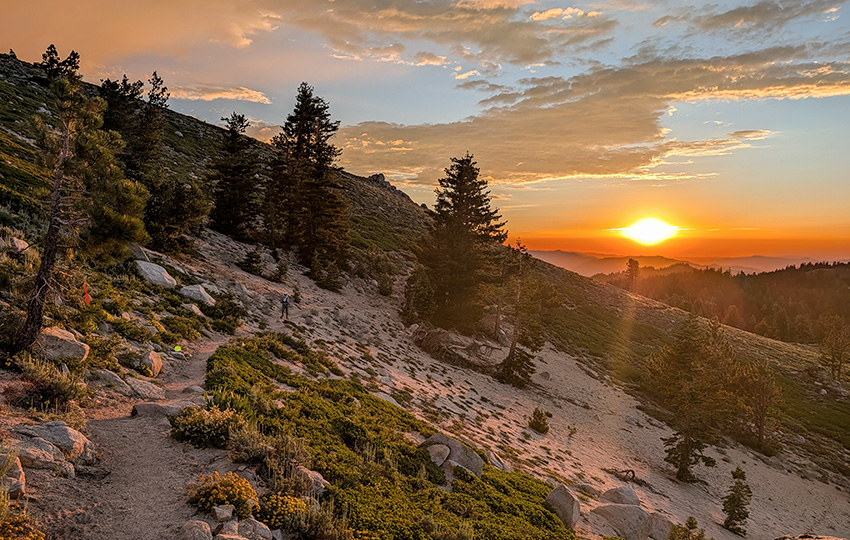
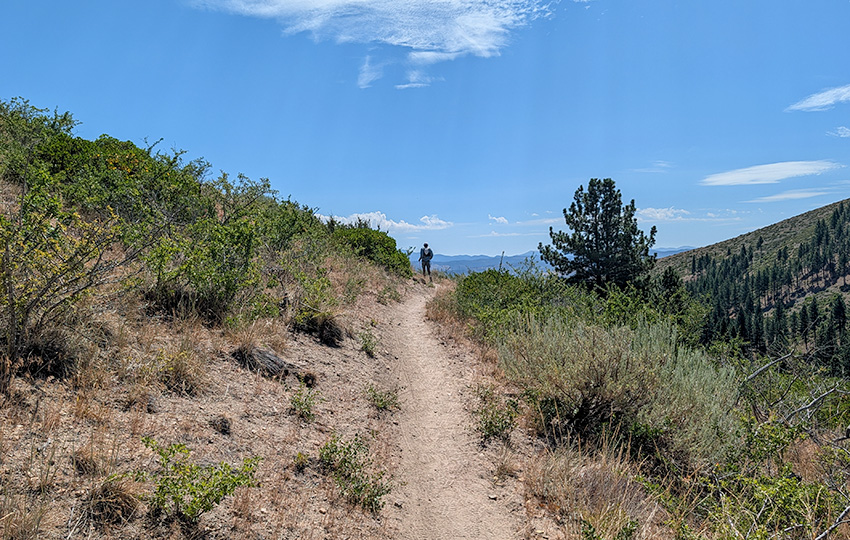
So we left Waterfall aid station and the protection of the forest canopy. Then we proceeded down the mountain toward Carson City. Full exposure. Summer heat. Lots of switchbacks.
Dave was talkative for the first couple of miles. So much so that we had a conversation about God, the continuum of life, and how to will into existence our reality by using thought as action and then holding our concentration. That was inspiring, and took our minds off of the pain and fatigue.
Eventually, however, reality caught up with us again. Dave was back in triage-mode. Grunts and moans overtook the high concept conversation. He took a pause here and there in order to catch his breath and to ensure everything he was eating and drinking stayed down.
Toward the bottom of the mountain, we crossed a bridge over a small creek. We stopped, and I soaked my bandana. Then I put it on my head and secured it under my hat. We were getting cooked, so it helped keep my head cool and protected my ears and neck from the sun.
That brief respite nearly turned into a catastrophe, however. A quarter mile past the water crossing, Dave realized that he had forgotten to pick up his phone after having set it on the bridge. He made a quick step back in that direction but stopped. Then he looked at me and said, “Hey, can you grab my phone?”
I ran back, found the phone sitting on a support beam in shadow, and then returned to him. I’m so grateful that he realized that he had forgotten his phone when he did. I don’t know that I could have mustered the energy to go back a mile or more. Well, I would have. It just would’ve been really exhausting!
More heat and sun exposure and, yet, the show must go on.
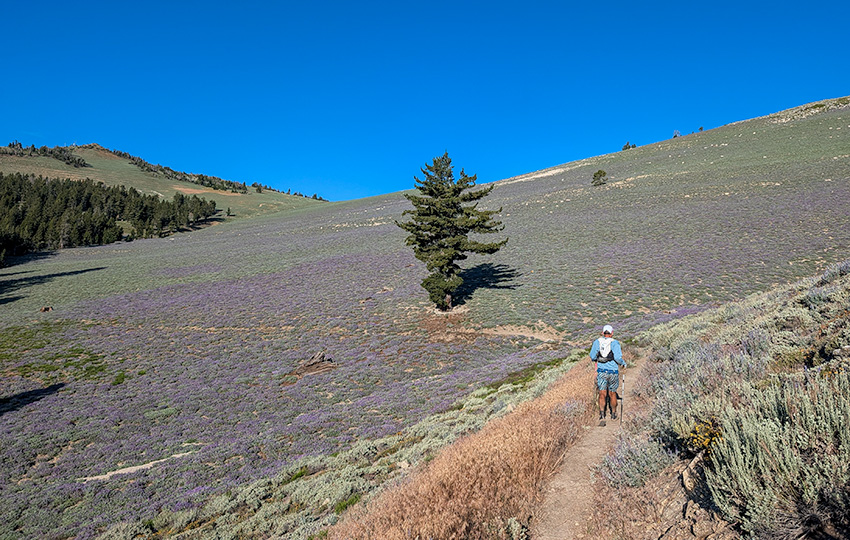
We passed the last water aid station, which wasn’t more than a couple of jugs of water. The final miles consisted of multiple, low-angle switchbacks through the high desert en route to the finish line at Western Nevada College’s baseball field.
Dave tried to run a few times in that list mile, but his efforts were short-lived. “I can’t do it,” he said. But he was still cruising at a 3.5mph pace. Unbelievable. He was a machine. And that was enough to get him over the finish line.
Finish Line
As we approached the end of the race, volunteers were strategically positioned so that they could cheer and direct us around the outside of the baseball field. Nick was also waiting a couple hundred meters from the entrance to the field, and he filmed Dave as he rounded the corner and made his way to the end. I peeled off to the side while Dave walked the final steps across the finish line.
Dave officially completed the 102 mile distance in 31:01:40 hours. His best case scenario was to complete it in under 30 hours. However, he did beat his previous time of 32 hours despite his fueling struggles. Also, he placed 49th out of the 110 finishers of the race. That, and there were about 34 people who DNF’d (did not finish).
At the end, there was a tunnel where all of the finishers passed through. They were then stopped and evaluated by medical staff. While Dave was being cared for by the professionals, I met up with his friends who were waiting on the other side of the tunnel.
That’s when I looked at my fitness watch (with the intention of stopping it) and realized that I only needed 0.12 miles to roll over to the next mile. Being the OCD person that I am, I took a quick lap around the baseball field to officially log 29 miles for the event.
Once I returned to the tunnel, a volunteer handed me a glass of ice water, a coke, and then I shared more conversation with Dave’s friends. Soon after, Dave was escorted to the recovery tent. So we all followed.
At the tent, one of Dave’s friends pointed out that he looked pale. I agreed. Dave was relaxing in a recliner beach chair, cooling down, and drinking water. However, he eventually asked to sit upright. Then he signaled for a puke bag. At the recovery tent, these were standard issue. Basically it’s a circular, open structure in which a small bag was fixed so that you could puke into it without the bag collapsing. Dave evacuated all of the water that he just drank for puke number eight. Immediately afterwards, though, he looked better with color returning to his face.
One of the staff stationed at the recovery tent asked if I had run. I explained that I was just a pacer, but he said that we all needed to rest just the same. So I pulled off my shoes and laid back in one of those recliner chairs. Except for sore legs and feet, I actually felt good. But it was nice to lay back in that chair nevertheless.
Instead of closing my eyes, though, I started texting updates to friends. That included contacting Theresa, my friend and roommate, who was picking me up.
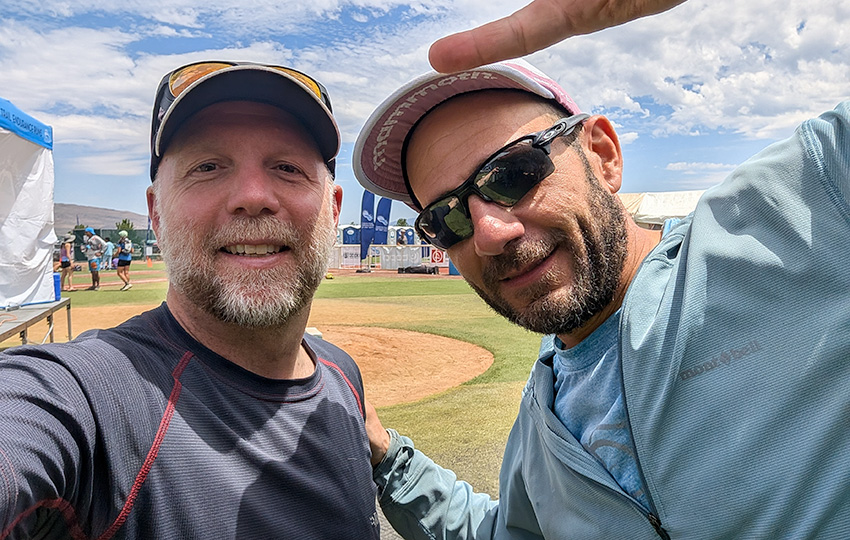
After arriving at the baseball field, Theresa made her way to the recovery tent. She and Dave chatted for a minute, I took a selfie with Dave, and then I grabbed my gear. Then Theresa and I walked over to a porta potty so that I could change into dry clothes before heading back up to the Diamond Peak Ski Resort to retrieve my car.
Heading Home
We made it to Incline Village in about an hour. Honestly, my drive home was probably the hardest part of the whole thing. I should’ve laid my car seat back and dozed off for a while before setting out because it was a struggle to stay awake during that drive home. Fortunately, I had plenty of people to talk to (via Bluetooth through my car), so I ultimately made it home safely.
The only thing left to do then was to shower, eat, and sleep. While I jumped in the shower, Theresa picked up a pizza and hot wings. Then we watched a show while having dinner. I crawled into bed at 5:30PM and slept until 4:30AM the next morning. It was glorious, and probably the most I’ve slept in a single stretch in decades.
But I still had to go to work that next day. So I got ready and did just that, like the past 36 hours never even happened! Believe it or not, though, I actually felt great. Sure I was fatigued but, for the most part, all of the soreness I experienced during the race was already gone.
Final Thoughts
Traditional marathons are not the same as endurance runs. Marathon courses are generally flat and they’re usually on asphalt. They often start early so you’re not running during the hottest part of the day. You don’t have to carry water or food as it’s available at the aid stations, which are often plentiful along the course. So, with a marathon, you can maintain a swift pace while simply battling the clock.
From my experience, I’d say that most athletically fit individuals can finish a marathon within a 3-5 hour timeframe. For example, I completed my first in 3:48. Then, I ran my second an hour slower at 4:48 because I developed a hip flexor issue mid-race that caused me to walk a few miles. Either way, most people who specifically train for a marathon should be able to perform at a fairly high level for those 3-5 hours.
Endurance races, on the other hand, are wars of attrition. You have to manage all of your resources, including food, water, levels of energy/fatigue, and all of the ailments that manifest based on repetitive movement that often lasts between 6-36 hours. Obviously, there are aid stations. However, they’re usually many miles apart. So, again, you have to plan accordingly and stay hydrated and fueled on the go.
And endurance race courses are usually brutal. They often include many thousands of feet of elevation gain (and subsequent drop). And because they’re on dirt and rocky trails you’re constantly avoiding tripping hazards and, therefore, breaking your rhythm. You also don’t get the same purchase in dirt as you would on asphalt. So it’s inherently more challenging to maintain a fast pace even on flat terrain.
The role of pacers is also different between marathon-type races and endurance races.
With the more urban types of setting, pacers usually lead while the main runner cruises behind. In essence, they’ll draft off of their pacer.
With endurance race pacers, however, they’ll either run alongside the lead runner (assuming the trail is wide enough) or behind. The endurance pacer is often there to assess the lead runner’s mental and physical states, and to provide a safety net if the lead runner starts to fail. Endurance pacers will also retrieve food and water for their leads at the aid stations so that the primary runner can rest. That said, pacers can’t actually carry anything for their leads or physically assist them on the trail.
People ask what I’m training for as I’ve been consistently logging 40 miles per week this summer. And I don’t really have any great answers other than for my health. Perhaps next year I will run an endurance race, but that’s yet to be determined. I’m just enjoying the training process and being on the trails right now, so I’ll keep on trucking until the snow flies (and I can start cross-country skiing again!).
Wow! What an experience. You both can be proud to have overcome the challenges of this run! Quite the accomplishment.
Thanks, Joan 🙂
It was definitely a struggle, but rewarding. And I’m grateful to have been able to support Dave in his pursuit of achieving his goal!