Recently, I watched an interview of a research scientist who studied athletic performance as it related to age. What she found was that so long as you train smart and hard, into advanced years, you can minimize the decrease in your performance.
This is generally considered to be contrary to popular belief. That is, many people think that by age 40, for example, our physical fitness is so far gone that we’re only a few short years away from using walkers and popping pain killers every day!
Of course, I’m joking. However, there are many negative perceptions about people’s abilities to perform at a high level based on age, background, and available resources. So I was encouraged by the researcher’s argument since I, myself, am an older dude who started trail running last year (2025). And, although I ran many miles in my youth, it’s been decades since I’ve consistently run. So, I’m basically starting from scratch.
Support Tahoe Trail Guide with a financial contribution via PayPal (single contribution) or Patreon (reoccurring contributions). Your support of Tahoe Trail Guide is very much appreciated!

And, to be honest, I also discovered my passion for cross-country skiing later in life. But since I devoted myself to it ever since I began in 2014-15, I’ve become an excellent xc skier. At least that’s what my peers tell me 😉
So I like to believe that old dogs can learn new tricks.
In this short series of articles, I share some steps that I take to succeed when embarking on new endeavors.
Mind More Than Matter
Obviously, life has a way of taking its toll on our bodies. Sometimes a permanent disability prevents us from performing certain physical actions. Other times we may be limited due to an acute injury from years past that never properly healed. More often, just the repetitive action and stress of daily life can wear us down to the point where we experience limited strength and mobility.
In spite of any physical limitations we may have, however, there’s a bigger barrier to learning new stuff and becoming really good at it. And that’s our attitude, mindset, and our beliefs about what we can accomplish.
Without conditioning our minds to deal with adversity and accepting new challenges, it’s nearly impossible to accomplish anything notable.
Fear of Failure
Failure is a powerful deterrent for those thinking about trying new things. Nobody wants to embarrass themselves, and learning new body movements and skills can definitely be awkward. But “failure” is an integral part of the process. It’s some of the best feedback that’ll guide us along our way.
Obviously, though, some fails are more difficult to bounce back from than others. But if we want to become great at anything, we’ve got to be willing to take some risks. No one hits a home run every time they step up to the plate, after all. And you’re definitely never going to hit one if you never even pick up that bat.
One of my best friends used to be a fantastic writer. He constantly wrote songs, poems, and short stories. I loved nearly everything he produced. In fact, we collaborated on a handful of stories. I wouldn’t say it was our finest work ever. But we had fun creating together, and we learned a lot along the way.
My friend, however, was never truly satisfied with his own work. As a result, he never felt confident enough to submit anything for publication. He believed that unless he was going to write the next Great American Novel or an equivalent masterpiece, he couldn’t see the point of even trying to publish. But perfection is an unrealistic goal. So nothing he wrote was ever good enough. And he even went so far as to periodically destroy his notebooks because he didn’t believe his work had any merit.
Unfortunately, my friend passed away a few years ago so nobody will ever be able to enjoy his work. And none but his closest friends will ever know that he was a great writer.
Choose Your Goals Wisely
I’m a big advocate for choosing SMART Goals. However, I’ve already written an article detailing that approach so I recommend also reading that piece. That said, the S in the acronym SMART = Specific.
I appreciate having a specific goal in mind when setting out on a new adventure. It helps us develop a laser-focused approach. However, like my friend, many folks choose goals that are so specific that they’re often unrealistic. Much like a kid who’ll only play the game if he’s guaranteed to win every time.
So we need to consider other options when choosing our goals. We need to see “success” as being something other than only taking first place or scoring the winning goal.
As a 51 year old beginning trail runner, I have no allusions of one day winning the Western States 100-Mile Endurance Run. However, there are many other long-distance races (including 100-milers) that I could run if that was my goal. And, of course, there’s no guarantee that I’d ever win any of them. But, most likely, I would just choose a specific time in which to complete the race. Then, if I did another, I’d try to run it faster.
The same goes for cross-country skiing. I’m never going to be a World Cup xc ski racer. But there’s plenty of master class races in which I could participate if I wanted to race. In the meantime, skiing 100+ days per winter will be my reoccurring seasonal xc ski goal.
There are always options for achieving big goals, even if they aren’t a first place finish or a Pulitzer Prize winning award. And we do this by choosing SMART Goals (again, read my article on SMART Goals) and cultivating a vision where we can see ourselves doing that which we desire.
Mind Games
Keep in mind, cultivating a vision of ourselves succeeding isn’t simply about day dreaming while on our lunch breaks. Even if we don’t know all the steps (right now) to achieving our goal, we have to visualize ourselves living that life. And we have to actively do this because it has the power to shape our reality.
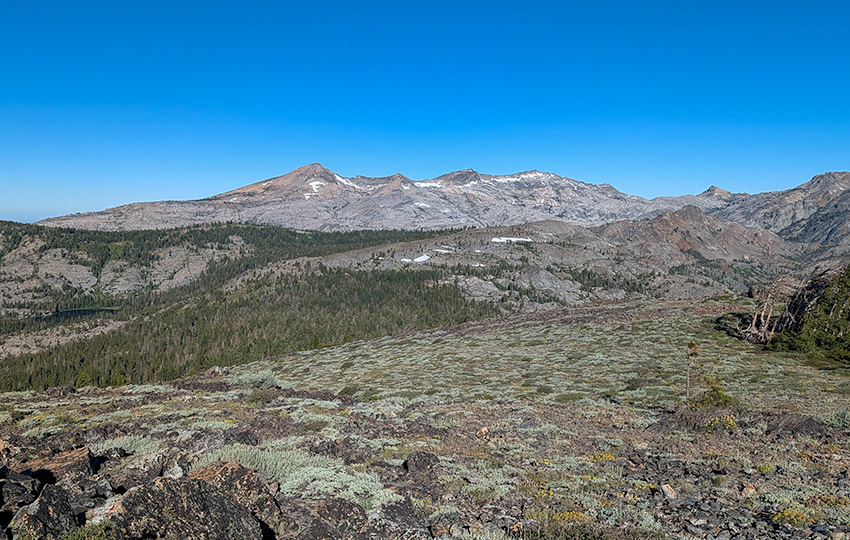
The idea that I run to my summer job three times each work week is ludicrous to most people. And it was to me for a long time. That’s because my route is a 3+ mile trail run that includes 1,100 feet of elevation gain. To a seasoned trail runner, this isn’t a big deal. But coupled with the eight hours of work (on my feet) and the run home afterwards, it can be a big deal.
Before attempting the feat on an actual work day, I spent some days off traveling the route. Then once I had a clear picture of what I had to do, I started building it into my routine. I ran it once or twice each work week last summer (2025). But now I run it three times each week without giving it much thought. In fact, I often add mileage and elevation to my trips in an effort to push myself even more.
In my case, scouting the trail before actually incorporating the run into my schedule enabled me to clearly visualize the process. And, to this day, I still mentally run the route before heading to work. This is because it better prepares me for the adventure.
Routine = Blessing
By the time we’re 40 (and oftentimes younger), many of us already have an established routine. In other words, work, family, finances, and a life lived, often conspire to keep us from diving deeper and training more diligently to achieve our other goals.
Furthermore, we’re not usually looking to change careers or begin a large-scale, personal enrichment project at that point in our lives. Well, assuming that we’re not experiencing a mid-life crisis! But if life is good, there’s few compelling reasons to make dramatic changes to our routine.
This makes sense because routine can increase efficiency. Life is easier when we can just get to a thing without having to make a production out of every step of the way. Essentially, this is why we take the same route to work or school. We don’t have to spend extra energy just getting to the thing that we need to do.
But there’s a serious downside to sticking with a routine for too long.
Routine = Curse
Eventually, routine just becomes the path of least resistance for getting through our days and weeks and months. If performed long enough, routine yields to complacency. And complacency seldom leads to anything good. So it’s no surprise that performance diminishes over time.
This is no different than performing the same exercise with the same weight over an extended period of time. Initially, it’ll be challenging. Then our body will adapt so that we can handle the load. But without a lack of new stimulus (i.e. more reps, heavier weight, or new exercise), our performance plateaus. This is a natural part of the process, just like failure, and it’s okay to be here for a little while. However, if we don’t mix things up we’ll end up losing fitness.
This is because we’re dynamic beings. Whenever adaptations occur we can enjoy them for a limited time. However, the body and mind ultimately needs new stimulus to grow.
I see this happen constantly with my trail running. If I don’t increase mileage, elevation, or intensity on a consistent basis, my fitness watch lets me know about it!
For example, the watch collects data and indicates whether I’m losing fitness, maintaining it, progressing, or working too hard. I then gauge those scores with how I feel in real life. And it seems pretty accurate because, more often than not, what used to be challenging for me is now a walk in the park.
In other words, we can’t keep repeating the same exact routine and expect to progress forever.
Break the Cycle
Altering our routine is another way in which we develop our vision for achieving greater things.
We often become so entrenched in the daily grind that it’s as if we’re running on autopilot. Before we know it, the work day is done and we’re beginning the evening program. Soon, thereafter, we’re crawling into bed. That’s when it’s really difficult to see a way in which to incorporate a new activity into the schedule.
So if we’re to tackle any new goals or challenges, we need to modify our routine. We’ll then need to incorporate elements of our new activity into our schedule and create a new routine. We don’t necessarily need to toss everything out and replace our routines completely. Just start a little each week, like I did last summer by running once or twice to work each week.
I’ve considered running to work all five days. However, I can’t wrap my mind around that idea (yet!) since I run a longer session on one of my days off. But, for this season, three days a week is manageable and appropriate.
Parting Thoughts
I know that the researcher was specifically studying athletic performance as it relates to age. But I believe that the study has broader implications.
Essentially, I would argue that the same results could apply to any of us attempting to excel in nearly any art or discipline. This is within reason, of course. We all can’t be astronauts or acrobats in the Cirque du Soleil, after all!
But as long as we overcome our mental hurdles (fear of failure, lack of vision, inertia of routine) and put in the physical work, we can achieve extraordinary results regardless of age or endeavor.
So start visualizing the type of adventure you’d like to go on or skill that you’d like to learn. Then, in the next installment, I’ll offer some more ways in which I go about reshaping my life in order to accomplish new goals!
Ive been following you off and on for a few years now. I originally found you for your XC skiing. As someone who just turned 40 last week, I found the blog post especially meaningful and useful. I also trail run and love that you found it as well.
Hey Duke!
Thanks so much for keeping in touch. I’ve been a bit sporadic with publishing TTG articles these past couple years, so I appreciate you checking back in 🤗
Yeah, trail running has really been fun! I love the freedom of movement that it provides, much like xc skiing. And I think that this is the right time for me to embrace it. Previously, I had other priorities that took precedence. Now I’m making the running my priority 🏃
Anyway, thanks for reading and the kind feedback ☺️
You have any trail running events planned? Have you done or considered a backyard ultra?
Funny enough, I’m going to be pacing a friend tomorrow night during the final 28 miles of his 100 miler. It’s the TRTER 100 and, fortunately for me, most of the section I’ll be running with him will be a traverse and downhill. I’m still a bit nervous, but he’ll have run 72 miles by the time we meet so we’ll most likely be running fairly slow. All of that said, I’ll probably do some sort of longer end of season run around the Tahoe area. I just get so buried with work during the bulk of summer that I don’t get around to planning much for my off season. But I’m sure I’ll do something 😁