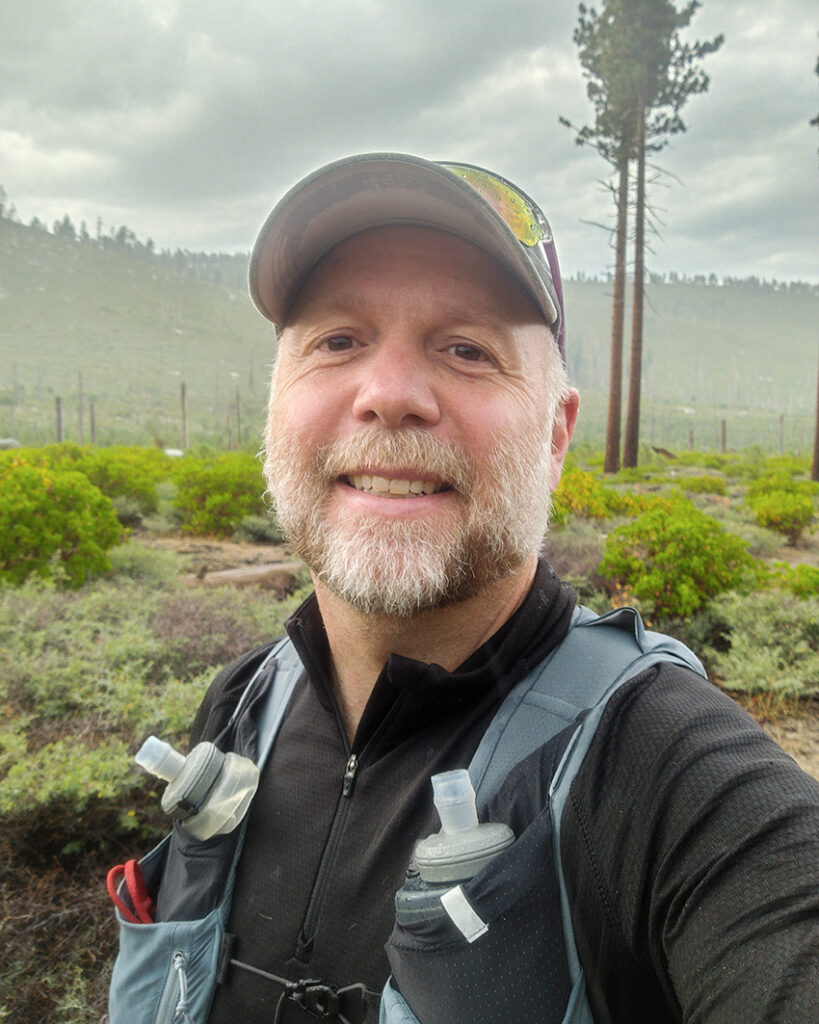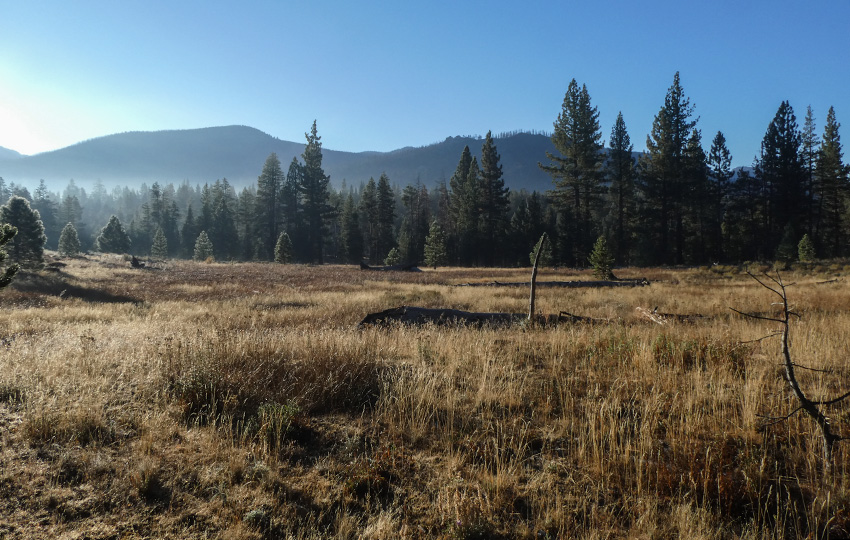
Even before I started my low heart rate training this summer (2025), I had all kinds of romantic ideas and hopes for the experience. I imagined myself valiantly running to the top of Freel Peak (10,881’) for the sunrise one day. Then, on the next, I’d summit Mount Tallac (9,735’) for the sunset. And maybe on my days off I’d log some 30-milers or 60 mile overnights.
Well, those fantasies quickly yielded to reality! I mean, really quick. Like, after my first two or three runs back in May, I instantly reevaluated my expectations. This wasn’t, however, because the running was such a shock to the system. Rather, it immediately became clear early that I was going to be stuck running at a snail’s pace for a long time.
Read the first part titled First Experience with Low Heart Rate Training (Part 1): My History of Dabbling in Endurance Sports.
Read the second part titled First Experience with Low Heart Rate Training (Part 2): My Goals and Methods of a Trail Running Summer
Support Tahoe Trail Guide with a financial contribution via PayPal (single contribution) or Patreon (reoccurring contributions). Your support of Tahoe Trail Guide is very much appreciated!

Low Heart Rate Training is Specific Training:
As I mentioned in the first two parts of this mini-series, I was determined to embrace low heart rate (HR) training. Therefore, my specific HR goal while trail running was to maintain 120-140 beats per minute (bpm). And, this was regardless of the time or distance I planned to run on any given day. What I didn’t fully understand until running those first few sessions, though, was that maintaining a low heart rate is really hard to achieve without specific training.
I’m stating the obvious, here, but it’s the bottom line. You literally have to run (and walk when necessary!) at a low heart if you want to be able to consistently run at a low heart rate. You have to give your body adequate time to make the necessary adaptations that’ll allow you to eventually increase your pace while maintaining a low HR.
Now, I have seen other methods that people have used to achieving a low HR while running. However, the run-walk-run method (exactly as it sounds) is considered the standard practice. And that’s what I used this summer. As you might expect, this whole process just takes a long time. But we’re building for the long-term, here.
So, even with my athletic background, I had to walk constantly to allow my heart rate to recover to that lower threshold of 120bpm (before resuming a running pace again). So, in my opinion, the physical aspect of this type of training isn’t too difficult. In fact, trail running was surprisingly pleasant and rewarding when keeping my heart rate down. It felt less like a war of attrition compared to my younger days (when I always ran at a high intensity) and more like an enjoyable excursion into nature. Of course, I was consistently fatigued and often sore afterwards. However, I seldom felt completely exhausted after any of my trail runs.
Casual versus Competitive Approach to Trail Running:
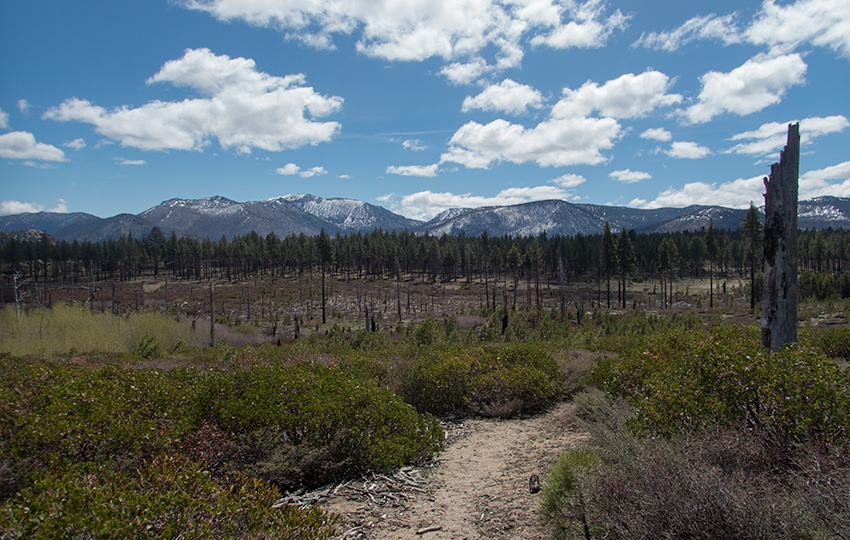
Admittedly, my longest run of the summer was only 14 miles. I also ran a bunch of 8-12 mile days. Mostly, though, my mileage ranged between 3-7 miles. And many of those 7-mile days were split in half. That’s because I ran to and from work a couple of times each week (3.5 miles one-way).
By July, though, I was running 25 miles per week which was a good number considering I worked full-time. Basically, I didn’t want running to completely take over my life. I have this habit of swapping one obsession with another. And, in this case, I could’ve easily prioritized running to the point where it was all that I did outside of my other responsibilities (i.e. work, eat, and sleep). So my intention was to integrate this new training into my life, not allow it to consume my every waking minute.
Mental more than Physical Challenge:
The real challenge for me with low HR training was actually the psychological discipline required to stick to it. I used to pace at 7-8 minutes per mile, but now I was basically restricted to the speed of walking (15-20+ minute/mile). Granted, I’m much older now than when I did run at that faster pace. However, I assumed that I’d be able to run at least 11-13 minute miles fairly regularly during this training cycle. But that was seldom the case. Occasionally, to mix things up, I did run at that pace but not while staying within the 120-140bpm range.
Ultimately, this meant that I wouldn’t be covering nearly as much ground as I had originally hoped. Hence, the reevaluation of the summer’s training schedule soon after starting.
Although this was a blow to the ego, realistically, it wasn’t that big of a deal. I’m planning for the long-term, after all, so I didn’t feel rushed to accomplish anything in particular within a set amount of time. I just wanted to start consistently running again. And, honestly, dialing back my expectations released a lot of pressure that I was placing on myself to perform.
In many respects, it felt like for the first time in my life I had given myself permission to simply enjoy the experience of running. This was a huge victory for me considering how I used to approach running (see part 1).
A Loose Running Schedule:
Once I overcame that psychological hurdle, I settled into the routine of running those 25 miles per week. I factored into my schedule two trail running commutes to work, and then spread out the remaining miles over the remainder of the week.
Essentially, I set aside 1-2 hours for running on work days and 3-4 hours on my days off. That said, I did take 2-3 days off each week from running. Sometimes they were back-to-back. Other times, I staggered them throughout the week. It just depended on how I felt, how much I was running at the time, and if I had other commitments to keep.
In essence, I had a running schedule. However, it was fairly loose. But that flexibility was crucial for seamlessly integrating running back into my life.
Outcomes of Low Heart Rate Mini-Goals (from part 2):
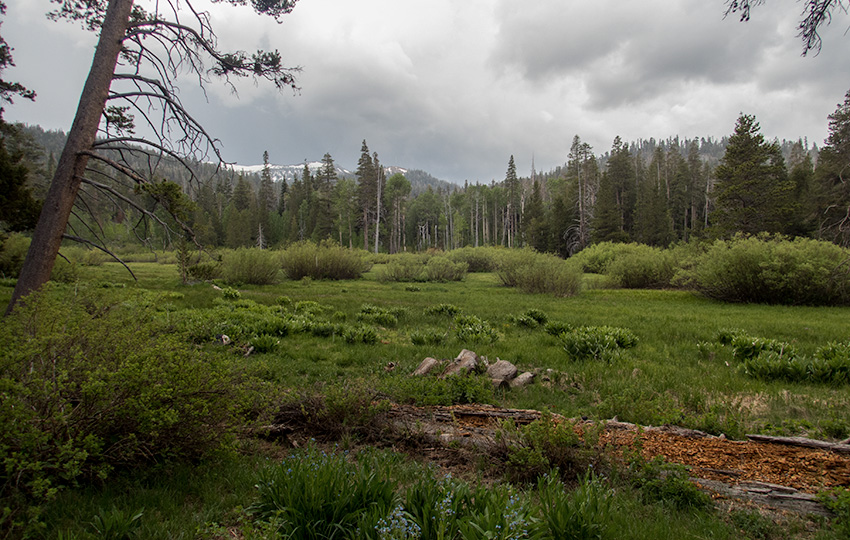
After letting go of my ego and toning down my grand expectations for the summer, I began learning new lessons and achieving smaller running goals.
In the following sections I discuss the results or, rather, the experiences I had based on those lessons and goals.
Sustained Stress is Sustained Stress:
I would argue that the most profound lesson that I learned all summer regarding heart rate and endurance training is that the mind knows, but the heart doesn’t care. What I mean by this is that regardless of activity, sustained stress is sustained stress. Whether you’re walking, running, xc skiing, or whatever, the heart is going to pump as hard and fast as it needs to based on the stress under which it’s placed.
So if I’m aiming for a range of 120-140bpm and I have to walk uphill in order to stay within that range, for example, that’s perfect. I’m doing exactly what I need to be doing despite knowing that I’m not actually running up the hill.
Now, I’m not saying that by this same logic you could just sit on the couch and vigorously use a “shake weight” and achieve the same results Haha! You still have to put your body through its paces (pun intended) so that it’ll adapt properly to the movement of running.
We still need to develop our muscles, tendons, ligaments, joints, and the oxygen carrying capabilities of our overall aerobic engine. So you have to hit the trail, even if that includes a lot of walking. But knowing that the run-walk-run method is an effective type of training, allows you to let go of the ego and just get down to work.
Continuous Forward Movement:
When starting low heart rate training, people often become frustrated at having to slow down so frequently. This is to allow their HR to recover. But this is the discipline. By dialing back our intensity and slowing down and walking, we’re signaling to our heart that it, too, can slow down. This is essentially called “active recovery.” You’re teaching your body to recover while still maintaining continuous forward motion. Although it’s at a much lower intensity and slower pace.
One thing that I discovered mid-summer was that this adaptation works both ways, so-to-speak. After a couple of months of training, for example, my heart rate would drop quickly when I paused to take a photo. And if I stood around too long, it would drop too low. So then I’d have to hustle to pick up the pace again! I loved seeing the direct results of my training in action. However, this kind of became a thing for me, particularly when I witnessed higher bird activity.
But that’s one of the reasons we go outside, right? To see nature. So I gave myself a break in this regard. However, sometimes it was too easy to become distracted and, as a result, lose my momentum.
Uphill Blues:
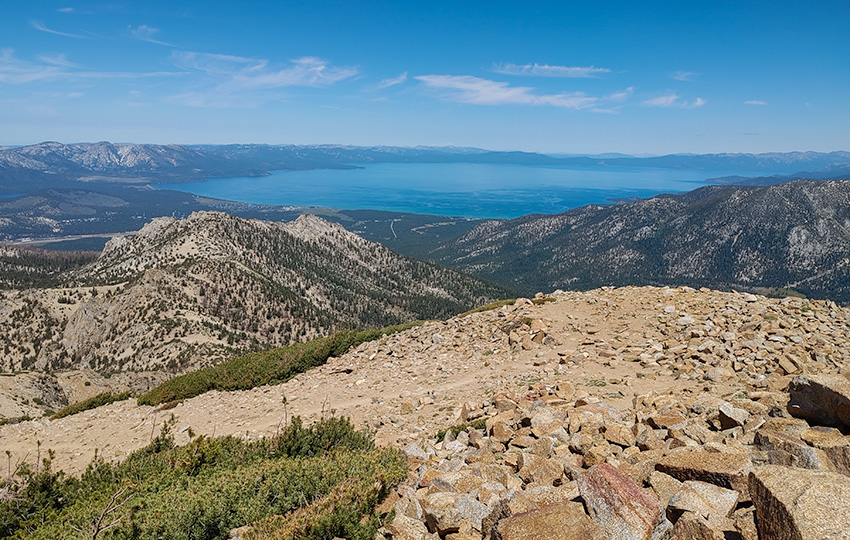
Nearly all summer, I had to walk uphill. Period. I never got to the point where my heart rate would stay below 140bpm when traveling up even the slightest of hills. And since I live in the mountains and frequently climb steep grades, this was a source of frustration.
I eventually developed a modified goal based on this experience. Essentially, if I couldn’t keep my HR below 140bpm on a steep hill, even while walking, I’d shoot for 150bpm or less. And, then, toward the end of summer I became good at keeping it to only a few beats above 140 on the steepest of inclines.
Maintaining a Running Posture when Walking:
I was much better at maintaining a running-like posture while walking toward the second half of summer. It actually took me a while to move slowly in that position because whenever I’d assume it, I’d feel compelled to go faster. So I had to specifically train myself to hold the position but move slowly.
That said, whenever I intentionally slowed down to look for a specific bird or plant I just walked in a normal manner.
Nasal Breathing, Measured Breathing, Linking Breath to Body Movement:
I’ve always focused on nasal breathing while running. So I was able to achieve that all summer. Essentially, I “call cadence” for myself by linking my breath to my body movement. The sound and rhythm is just so satisfying!
One of the benefits to nasal breathing, at least for me, is that my mouth doesn’t dry out. As a result, I don’t feel the urge to drink water so frequently.
Unfortunately, I do usually suffer from late season allergies (mid-September through mid-November). And this year was no different. So I struggled during those months to maintain a decent rhythm while nasal breathing.
Training to Fatigue, Not Exhaustion:
I love the feel of having just worked out. But in years past I grew to view complete exhaustion as the evidence of a good workout. So this experience was exactly what I needed to learn how to train sustainably. And, again, despite any fatigue that I felt while running the experiences were always enjoyable.
As I mentioned before, I still took the opportunity to scan for birds and wildflowers during my trail runs. So that became one of my tricks for keeping my intensity down. That is, to focus on my surroundings rather than myself. I just found that I ran a little slower (and kept my HR down, as a result) when I was being present and “hunting.”
In contrast, my pace would always quicken whenever I started to dwell on the past or thought about everything I needed to do when I got home.

Gather data about my fitness
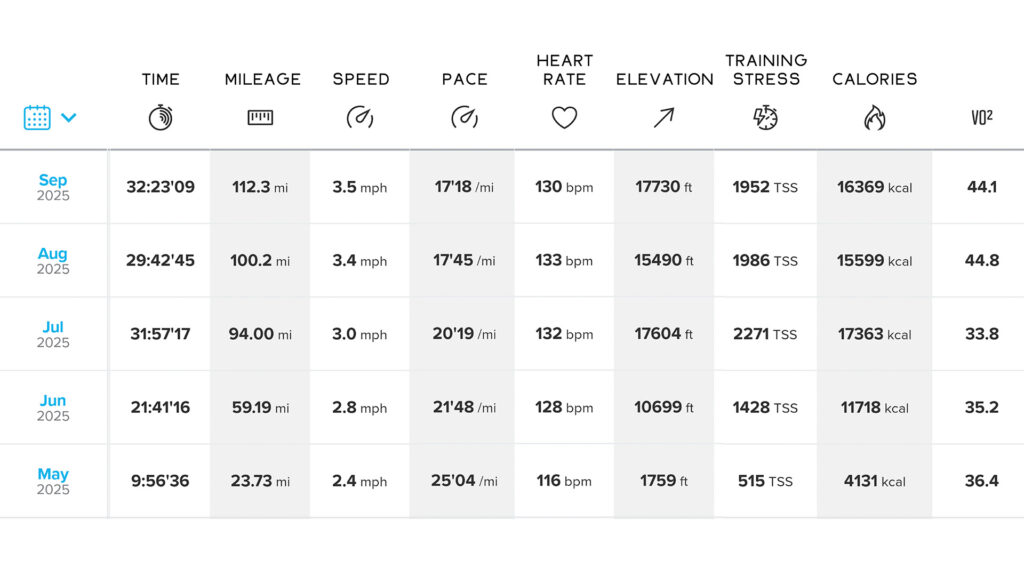
I hate wearing watches or jewelry. However, I learned to tolerate a watch for the sake of gathering fitness and sleep data. I realize that watches, alone, aren’t 100% accurate but being in the ballpark is good enough for me. So I’m glad that I’ve stuck with it because I now have a bunch of historical data with which to compare my current status. It also affords me the opportunity to see various trends in my health.
At some point late in the summer, I started developing a minor skin irritation from wearing my watch on the same wrist. So I’m a bit embarrassed to admit it. However, I finally realized that I could, in fact, wear my watch on the other wrist! Now I switch between both. I wear it on one side during the day, and the other at night.
Enjoy Nature!
This sentiment underpinned my entire summer. Although trail running is a slightly different way of enjoying nature, it’s close enough to hiking and cross-country skiing that it was totally natural. And, again, taking the pressure off of myself to be performing at a high intensity allowed me to enjoy the experience that much more.
Closing Thoughts:
I always find it difficult to make drastic changes in my life that includes multiple new processes. In those situations, I don’t feel balanced because nothing is a priority and everything competes equally for my attention. There’s only so many hours in a day, after all. So my primary focus this summer was to add running to my routine. Eventually, though, I plan to incorporate strength training, speed/interval training, and better nutrition into my work load.
I wish I could do it all right now, but that’s not usually how life works. Often, great things simply take time to accomplish. But I was extremely happy with my commitment this summer, as well as the training itself. And I have high hopes for the future.
Now it’s late November (2025) as I finish up this 3-part miniseries and, admittedly, my running mileage has decreased over the past two months. This isn’t a surprise to me, though, as it’s coincided with my summer job coming to an end in mid-October. Essentially, I’ve taken some time to focus on other tasks and priorities in my life. That said, I fully intend to continue this low heart rate training. Although, it’ll be on cross-country skis once the snow starts to fall! And that’ll be just fine. Then, when winter transitions back to spring and the snow melts away, I’ll pick up the trail running baton once again.