Throughout my life, I’ve considered myself to be an endurance athlete in one form or another. Not competitively, mind you. I’ve just always gravitated toward endurance sports.
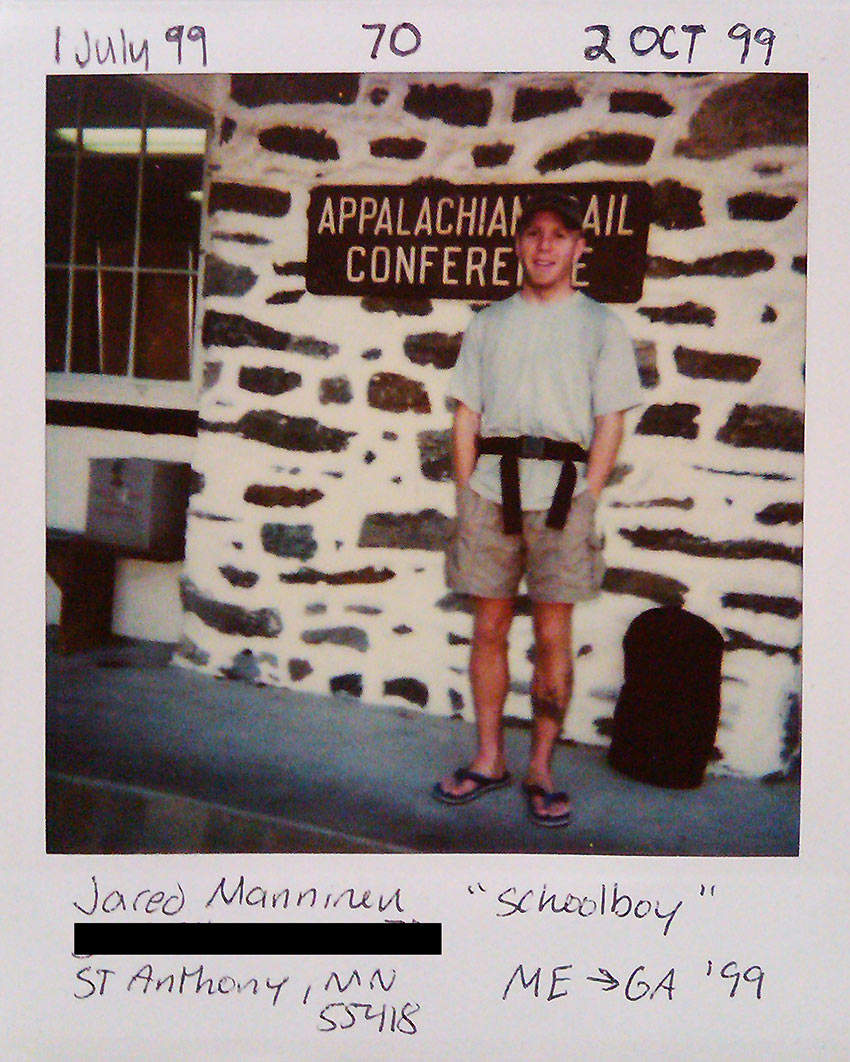
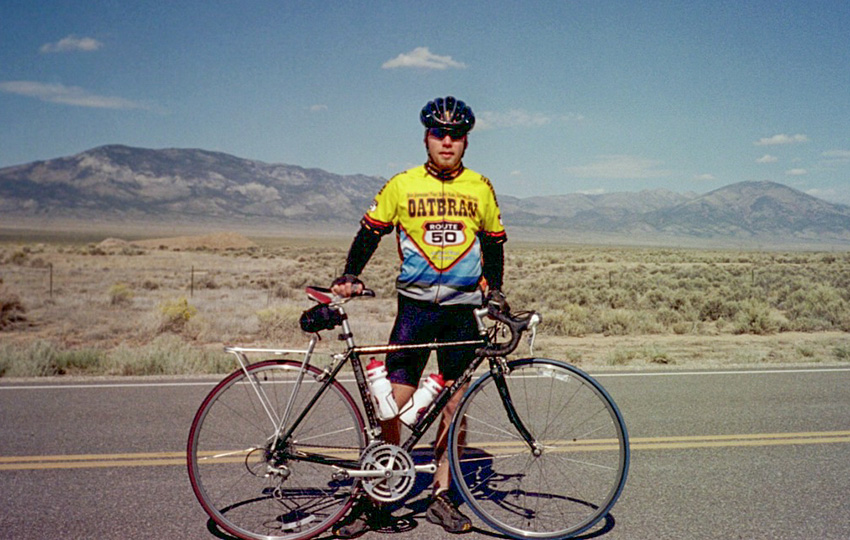
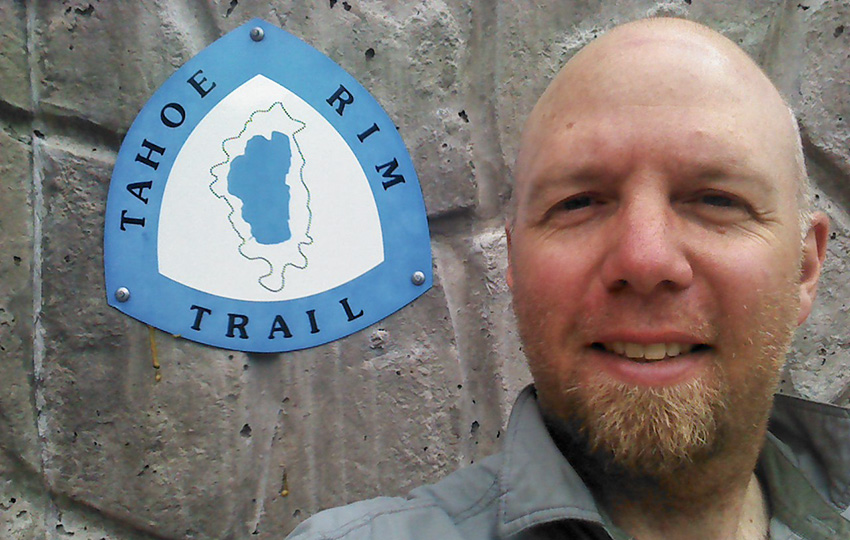
For example, I’ve run two marathons (1998, 2001). I thru-hiked the Appalachian Trail (1999) and Tahoe Rim Trail (2014). I’ve road cycled the 500-mile width of Nevada during a five-day tour (2007). I fell in love with cross-country skiing over a decade ago. So much so that I now average 100+ days of skiing and log between 400-700 miles each winter. To-date, I’ve only cross-country skied in one race (2019). However, it was 30km on classic skis which is a legitimately punishing experience.
Of course, I’ve participated in many other endurance-related activities between those larger events.
All in all, I’ve grown fond of grueling, longer-term athletic endeavors.
Read the second part titled First Experience with Low Heart Rate Training (Part 2): My Goals and Methods of a Trail Running Summer
Read the third part titled My First Experience with Low Heart Rate Training (Part 3): Experience, Results, and Concluding Thoughts about My Trail Running Summer
Support Tahoe Trail Guide with a financial contribution via PayPal (single contribution) or Patreon (reoccurring contributions). Your support of Tahoe Trail Guide is very much appreciated!

My First Marathon
Despite my experience, though, the only events that I’ve ever specifically trained for were the marathons. And the program that I used to prepare for them was very basic. Essentially, it was a straightforward mileage-based program.
Midweek, I ran three shorter sessions of 3-6 miles. Then, on Saturday and Sunday, I alternated between running medium (8-12 miles) and long (12-22 miles) distances. So, I’d log roughly 25-45 miles each week depending on where I was in the program. That was it. So long as you ran the miles over a certain number of weeks, you’d be good to go.
For the most part, I found this to be true. And, for that first marathon, I ran it in 3:48 which was very acceptable.
The program just felt a bit hollow to me, though.
What about the Intensity?
To be fair, this was during the late 1990s and information wasn’t accessible like it is today. Realistically, I only found one or two books about running marathons in the small town in which l lived. So I just ran with that program because I wasn’t aware of any other options.
What seemed to be lacking in that program was any sort of emphasis on how to run. Or, rather, the psychology and strategy to approaching each week of running. It’s clearly been decades since I ran that program, but I believe it was implied that the shorter midweek runs were supposed to be easier since they were shorter (less time to recover). And, then, the longer runs would be more difficult due to the extra mileage (more time to recover). But I just don’t recall there being any discussion of intensity with regard to running.
Keep in mind that I had been a wrestler growing up and, at the time, I was a USMC veteran. So my modus operandi when it came to exercise was to push, push, and then push a little harder. I only trained at one intensity level. And that level was always high.
So what I remember about that first marathon was how cooked I felt during and after many of my training runs. And this wasn’t necessarily due to the mileage. Again, I basically cranked the intensity up to 11 every time I ran.
Fatigue versus Exhaustion
Fatigue is inherent in the endurance game. In fact, it’s the primary factor with which we have to deal. Non-stop exhaustion, however, is another matter. You shouldn’t constantly be wearing yourself down during the bulk of your training cycle regardless of the sport in question. Rather, you should building for long-term success by tempering your training and focusing on making incremental gains.
We’re talking about our bodies, here, and they typically don’t respond well to being placed under extreme pressure over and over and over and over. Simply put, you can’t exert 100% maximum effort every time you run, or whatever, without hitting a brick wall. That approach isn’t sustainable and, ultimately, leads to injury in one form or fashion.
But, hey, I was much younger back then and I either wasn’t aware of, or interested in, the subtleties of that long-term building process. I just wanted to run. And I always tried to run faster than I did during the previous session.
Fortunately, I was young enough that I could shrug off the exhaustion and get up and do it all over again the next day. At 51 years old, I’m not that young anymore. And I don’t want to feel like I have to psych myself up to go into battle or, rather, survival mode every time I do run.
My Second Marathon
Now, for my second marathon I had a fantastic training cycle. In 2001, I was a massage therapist so I traded bodywork with colleagues every week. That helped immensely with my recovery. I even toned down my intensity a bit when running so that I could enjoy myself on occasion.
Unfortunately, I was in a relationship that was far from ideal. So somewhere toward the end of my training cycle, my state of mind took a nosedive. That negative mindset, then, seeped into my marathon performance. Instead of beating my previous time by 15 minutes, which was my goal, I actually ran a full hour slower than in 1998.
Needless to say, I felt like an absolute failure. I blame no one but myself. However, between the exhaustion associated with my first marathon and this unfortunate experience, I had enough. So I quite running altogether after that second marathon.
That’s not a great takeaway now, is it?
Post-marathon(s) Running Experiences
Admittedly, I have occasionally run since 2001. However, those sessions have never lasted more than a couple of weeks at a time. Much to my dismay I am, in fact, getting older. And, as a result, every time I start running, I discover that I have to work a little harder yet my pace has gotten a little slower. So, I become discouraged and quit.
Even as recent as last October (2024), I tried to start running again. But this time I couldn’t get more than a mile before my calves cramped up, forcing me to walk. I had never experienced that type of pain before, and it caused me to wonder whether or not I’d ever be able to run again. After three attempts over the following week, I quit. Again.
How many times have I done this over the last 20+ years? Too many.
Keep in mind, that I’ve never considered running to be a passion of mine. However, I’ve missed it for a long time because of its simplicity and the mobility it provides. Whether I’m running or hiking, for that matter, I absolutely love the fact that being on foot allows me to travel just about anywhere, and at various speeds. Riding bikes and roller skiing is great exercise and training. However, both activities are inherently limited. You simply can’t go everywhere on them.
Taking Inventory
Now, this winter (2025/26) will be my 12th season as a cross-country skier. For the past decade I’ve gotten into great shape during the winter thanks to the sport. But I never have any specific training goals once the season comes to an end. Basically, I just maintain an active lifestyle mostly by hiking during the warmer months.
In recent years, however, I’ve found myself dramatically slowing down once my summer job ends. So, by the time October and November arrive, I convince myself that I’ll pick up the slack when the snow flies (and I start xc skiing again). I’m finally acknowledging, though, that this isn’t an effective long-term plan for optimal health.
That, and I really hate being out of shape for the first and, often, second month of every cross-country ski season!
Planning for the Long-term
So, due to a series of events over this past year, I decided to implement a significant change in my life. I’ve begun to run consistently again. Not with the intention of completing another marathon or other type of race. Rather, I just want to focus on being healthier year-round by making running a habit.
So instead of adhering to a specific training plan designed for race preparation, I’m using other metrics to chart my progress.
For example, during each run I monitor my heart rate and pace. On a daily basis, I monitor my sleep and recovery. And, on a weekly and monthly basis, I monitor my mileage. I have some ranges for each metric that I adhere to, and will discuss that information in Part 2 of this mini-series.
Hello, Jared! You write: “[…] and I really hate being out of shape for the first and, often, second month of every cross-country ski season!”
Roller skiing in summer and autumn is from my point of view the best way to avoid being out of shape the first two months of the cross-country season. Have you tried it?
Hey Magnus!
Great to hear from you. I hope you’ve been well 🙂
Yes, I do some roller skiing, but not as much as I could/should. Mostly I’ve really enjoyed trail running and hiking due to the ease of it, as well as being able to go pretty much anywhere. We don’t have a ton of clean roadways and bike paths (all asphalt tends to get pretty torn up due to winter plowing) to roller ski on around my house, so I often have to drive somewhere in order to do it. Yeah, a lot of our roads are just really rough, and I’ve never been a fan of that non-stop vibration effect (not to mention the sheer resistance of the textured surface).
I’ve incorporated trail running into my commutes to work, as well, as it’s a great alternative to driving. But roller skiing to work would be a total battle for survival based on the road to get there (rough and very steep in sections).
Anyway, I will do my best to get some training roller ski sessions in this fall 🙂
Let’s hope we all have a great winter!
Thanks, Jared, for your reply! OK, yes, I see: roller skiing is a bit problematic in your area; rough roads with steep descents should be avoided. We have rough roads here too and that is partly why I started making my own roller skis, because just as you say: the non-stop vibration is not pleasant: https://rollerskis.wordpress.com/2017/08/12/prototype-3/
What roller ski equipment do you use?
Hey Magnus,
I remember when I was a kid trying to ride a skateboard over rough asphalt. So exhausting! haha 🙂 Our roads are always so rough from the snow removal operations in the winter. By the summer, they patch up the major holes but it’s not very often that we get a full resurfacing. And even when that happens it seems like they often only seal the road rather than completely smoothing it out. I’m sure you guys have a similar deal where there’s two seasons – winter and construction season 😉
I have a couple pairs of Fischer roller skis – for classic the RC7 and for skate the RC5. They’re both fine. I’m just always concerned about falling and the lack of decent pavement to roller ski. Your off-trail roller ski looks pretty sweet, though!
Its a good change in strategy. My wife is a PT who always advises me that I need to do other things other than endurance. My goal was to loose weight and endurance exercises was a good tool for that. Not to forget, dieting is the other half of the equation. I can’t say that I have hard goals, as something in life always throws a curve ball at me. I track every workout on the apps but not so much as an olympic coach might chart its athlete with line graphs and a dashboard that looks like an F35a. I don’t dwell on the past failures but I do make note and try to make the next one better. Always resetting. If means anything, don’t be so hard on yourself, —you’re doing better than average.
Hey Eric!
Thanks for getting back and reading 🙂
I was hoping to implement some strength training this summer as I’ve heard that it’s very beneficial for running, as well as just good exercise. But I just never got around to it. Mostly, I just wanted to make sure that I was consistently running each week. I find that building habits is a bit easier when you’re not trying to make multiple changes all at once. But, only so much time in a day!
And even though I track all of my data, I think I probably approach it similarly to you. Just as a general method of keeping within healthy ranges but not necessarily preparing for the olympics 🙂 I am pretty amazed at how much info and how well the watch/app analyzes the info. It seems way more productive than just going by 100% feel.
Again, I appreciate all of the support over the years!
Jared