In part one, I mentioned that a handful of events over the past year inspired me to reintroduce running into my life. Since I’ve already written about them (starting with my May 2025 newsletter), I won’t go into details here. Suffice it to say, though, that I do believe everything happens at the right time, in the right place, and in the right sequence.
So I began to run in earnest at the end of May (2025). And, by mid-July, I was logging 25 miles per week. I realize that’s a far cry from an elite runner’s weekly mileage. However, I was starting from scratch so it felt appropriate. Besides, I considered this summer to be my launching point for taking a longer-term approach to achieving better health. So, again, 25 miles felt like a good number for which to strive and maintain each week.
Read the first part titled First Experience with Low Heart Rate Training (Part 1): My History of Dabbling in Endurance Sports.
Read the third part titled My First Experience with Low Heart Rate Training (Part 3): Experience, Results, and Concluding Thoughts about My Trail Running Summer
Support Tahoe Trail Guide with a financial contribution via PayPal (single contribution) or Patreon (reoccurring contributions). Your support of Tahoe Trail Guide is very much appreciated!

Thoughts about Health Goals:
While wrapping up last cross-country ski season (2024/25), my original goal for trail running was to better prepare myself for the next one. Essentially, hiking during the summers hasn’t been preparing me the way I wish it would over the last few years. So I wanted to incorporate into my routine higher intensity training to avoid a major lag in fitness between winters.
That’s a really broad goal, though, isn’t it? After all, what does it even mean to be “better prepared for the xc ski season?” And, more broadly, what does it mean to be in “better shape” or just to be “healthy” in general?
Those questions are difficult to answer because there’s nothing specific or measurable about being healthy or in better shape. For example, are we talking about metrics like weight loss, resting heart rate, VO2 max, or distance efficiently covered on foot? Or are we just talking about the way we feel when we exercise or move about on a daily basis?
All of those are valid ways to measure health in their own right. However, the bottom line is that everyone’s definition is going to be different. So, early on, I struggled to come up with my own, as well as a more specific goal for my trail running experience.
Paradigm Shift:
All of my life, I’ve been a goal-oriented person who prefers a dedicated event to keep me on track. This applies to everything in my life, whether it’s related to sports, academics, work, or even hobbies. I’ve just found that I do a better job of staying focused when I’m faced with a concrete end-goal. So, normally, I would’ve just chosen something obvious like running a 10km race in xx minutes after x months of training. Then, similar to my marathon experiences years ago, I could’ve found a plan and executed it.
There’s absolutely nothing wrong with this. In fact, I’ll keep recommending that type of goal-oriented lifestyle. However, I also need to remember that life doesn’t always need to be so structured. No matter the discipline, we can always study, train, and immerse ourselves in it without actually having a specific end-goal in mind.
I do this with other process-oriented practices in my life, such as art, photography, and birding. Yes, I want to finish some paintings, share some photos, and see some birds. But there’s no real end-goal to any of those activities. I just participate in them because they’re fun, educational, and rewarding.
With running, though, it’s always been a chore for me. And, except for those two marathons, I’ve always treated it as a supporting element. For example, I’ve run just to get in shape for other sports and activities. That’s what I originally planned for this summer, after all. To run as a means of preparing for cross-country skiing.
But I had a change of heart this year. I wanted running to be its own thing. So I began to embrace it much like I do cross-country skiing.
For me, xc skiing is entirely process-driven much like my aforementioned hobbies. I don’t race or compete in events. I just ski for the sake of skiing, I love being outside, and I love seeing cool stuff in nature. Also, I love that it’s a healthy activity. Yet, despite taking a mostly casual approach to it, I’m always striving to become a better skier. For example, I have mini-goals in mind for each session. They tend to revolve around technique, but sometimes they’re focused on speed and distance. Underlying everything, though, is a basic desire to simply be outside, observe nature, and to elevate my heart rate a bit.
This is exactly what I wanted running to be for me, so I embraced the process as the goal.
Clarifying My Goal(s):
The process as the goal is still quite vague, though. And I knew that if I didn’t have some sort of mini-goals to work toward each session, I’d revert to old habits. And those old habits would have me running as fast as possible all of the time! That’s not a sustainable practice, though, nor is it very fun.
So I consulted with my cross-country ski buddy, Dave, who also happens to be an accomplished trail runner. He gave me a very specific but simple parameter with which to adhere while running.
He recommended that I maintain a heart rate of 120-140bpm (beats per minute).
This entailed running until my heart rate elevated to 140bpms (or beyond), slowing down until it lessened to 120bpms (or thereabouts), and then picking up the pace again. This is considered a run-walk-run (RWR) approach, and it’s a very stripped down version of interval training.
In order to allow for my heart rate to drop before running again, I could do one of three things.
- Decrease my running intensity (i.e. slow down)
- Walk instead of run
- Stop moving altogether
Dave also mentioned that this process would be frustrating. And he said that it was probably going to take many months, if not a couple of years, for my body to fully adapt so that I could run freely (while having a low heart rate).
He also said not to worry too much about distance and time. Run within reason, but as often and as much as I wanted so long as I felt good and that I was sticking to those beats per minute. Essentially what I was attempting to do was to build a base for much longer durations. This was a long-term process and I just needed to trust that process.
Additional Goals:
Throughout the summer, I stayed true to that 120-140bpm range. But as I enjoyed running outdoors (and finding birds and wildflowers!), I also tracked my performance using a GPS watch. The data collected enabled me to modify my approach to various terrain and circumstances. As a result, I began incorporating other mini-goals into each session.
Admittedly, I didn’t simultaneously focus on all of the aspects that I discuss below. There’s too many of them to juggle at once. However, they provided a mental checklist that kept me actively engaged in the running process. Eventually, they’ll become habit and I’ll be able to let my mind wander a bit more. Until then, however, they help me to avoid just “checking out” and reverting to old habits.
Often, I’d break up my runs into smaller segments. For example, I’d always adhere to that 120-140bpm range on flat terrain. However, even when walking up steep inclines my heart rate would spike above 150bpm. So instead of becoming discouraged at my inability to maintain a 140bpm or less on steep hills, I’d just try to keep my heart rate at 150bpm or below. This is still training the heart, but it gave me some leeway based on the conditions.
Similar to cross-country skiing, I always tried to maintain continuous forward movement. Even while waiting for my heart rate to drop to 120bpm, for example, I tried to avoid coming to a complete stop. With steep hills, I’d still walk but it was often very slow. But that’s the discipline, to regulate our intensity level so that we can “actively recover.” Simply put, we slow down when necessary.
I tried to maintain a running posture even when walking. People will call me silly for doing this, but I find that it’s a psychological mindset that translates into a physical practice. Essentially, the more we walk, the more we walk. And walking is not the same as running or cross-country skiing. Both of those disciplines require a specific body position in order to perform proper technique. With walking, we’re upright and our feet land in front of us causing us to heel strike. But with running and classic xc skiing (i.e. diagonal striding), we hinge from our ankles and lean slightly forward. And with each stride, we land on the front half of our foot with our body directly over that foot. This is a simplified explanation, but that’s the gist of it. Realistically, the more we walk, the less we’re training to run.
I focused on breathing through my nose, and keeping my breath measured and linked to my body movement. Some people don’t worry about their breathing when exercising, allowing it to happen naturally. However, I’m very deliberate about my breathwork. Nasal breathingprevents my mouth from drying out so that I don’t feel compelled to drink so much water. And, more than anything, coordinating my breath and body movement feels about as Zen-like as anything to me.
Less of a goal and more of an experience, but I wanted to learn how to train to fatigue rather than exhaustion. This is another situation when “active recovery” comes into play. I don’t have the scientific background to explain it in more detail. However, by regulating our intensity, we allow our body the opportunity to process out its waste so that we can recover on-the-go. This, in turn, allows us to run for longer, sustained efforts without feeling like we’re going to collapse by the time we return home.
Another learning-based experience that I wanted from trail running was to gather data about my fitness. Even though exercise watches are specifically designed to collect data, their accuracy is far from perfect. They’re just watches, after all. But as long as the data is in the ballpark, we can establish “normal” ranges in all the metrics that the watch analyzes. Then, as we increase our fitness, we’ll see trends and how those ranges shift over time. Armed with that information, we can train more specifically if we desire. Probably most important, though, is to learn how you feel in real-life compared to what that watch is telling you. Then you won’t need a watch at all!
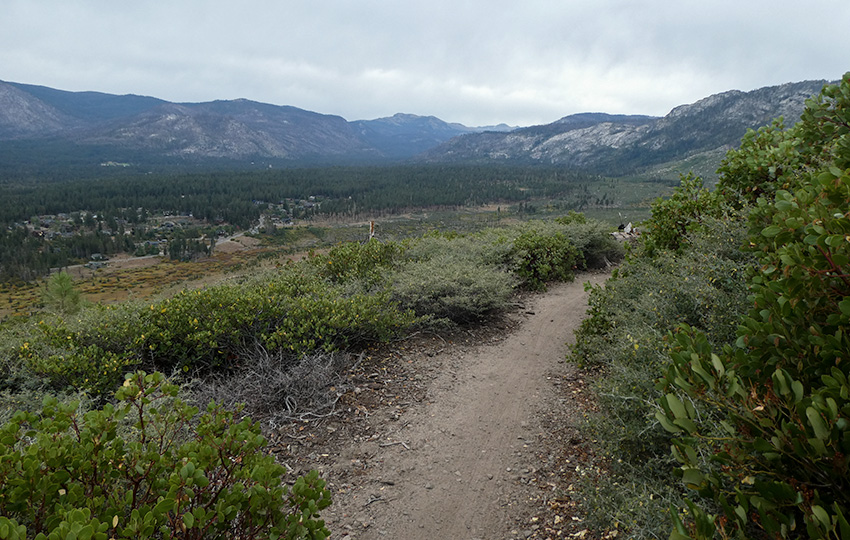
Although I list it last, here, the most important goal of all this summer was to enjoy my time in nature! And this often involved stopping to take photographs of the landscape, as well as birds and wildflowers. Admittedly, I stopped a lot during many of my trail runs because there was so much cool stuff to see. But that’s okay because that’s kind of the whole point of being outside.
One More Article
Now that I’ve discussed ad nauseum (!) my background and goals and methods, I’ll share the results of my experience and some final thoughts in the third (and last!) part of this mini-series titled My First Experience with Low Heart Rate Training.
Stay tuned!
Hi Jared. It’s Tree. I’m always in awe of your accomplishments and wish you the very best in all your endeavors. I wish our home was FULL of your wildlife and landscape photography. I still try to color in my coloring book and try to visualize the actual photo so I can choose the colors and shading appropriately. Mike and I send you OUR BEST ✌️💚🌲
Hey Teresa,
Thanks so much for the kind words! And I’m glad to hear that you’re still getting mileage out of my coloring book 🙂
Tell Mike that I said “hello” back 🙂